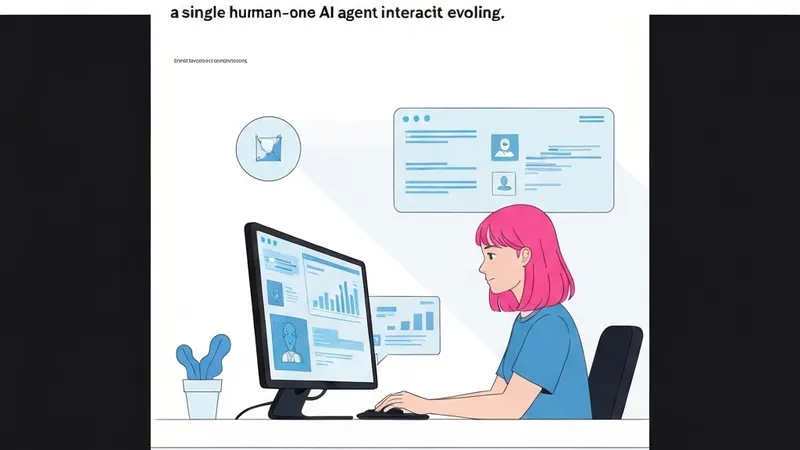
For the past year, "vibe coding" dominated the AI-assisted software development narrative. This involved a single person interacting with one AI agent for one task: you write a prompt, the agent generates code, you review, and you ship. This cycle, while effective, proved that non-engineers like designers, product managers, and founders could build real software with AI as a collaborator, with tools like Cursor, Claude Code, and Codex significantly lowering development barriers.
However, vibe coding quickly hit a ceiling. Running one agent at a time doesn't scale; the human remains the bottleneck. The loop is sequential—prompt, wait, review, prompt again. While faster than manual coding, the workflow remains largely unchanged from traditional development: working on one thing at a time. The tools evolved, but the underlying development workflow did not.
This is now changing. In 2026, the builder's role is shifting from writing prompts to orchestrating agents.
Instead of deploying a single agent for a single task, you now run multiple agents in parallel across various parts of your project. Imagine one agent refactoring navigation, another building a new API endpoint, and a third writing tests. Your role evolves beyond writing code or even traditional prompting. You define desired outcomes, assign tasks to agents, review their work, and decide what gets shipped. This isn't theoretical; it's what the latest generation of tools is delivering. They all converge on the same principle: the future of software development isn't about writing code, but about managing the agents that do. Consequently, the crucial skill shifts from syntax mastery to sound judgment.
As someone who has tested AI coding tools for over a year, a clear trend emerged in recent weeks: every major player is building an agent orchestration layer.
Cursor 3, launched on April 2nd, introduced a completely rebuilt interface called the "Agents Window." It enables running multiple agents in parallel across repositories and environments. You can view all agents in a single sidebar, initiate tasks from desktop, mobile, Slack, or GitHub, and manage the entire flow—from prompt to merged PR—within the application. My tests on a real project successfully ran three agents simultaneously on the same application, all completing their tasks while I was still typing notes.
Codex, OpenAI's offering, presents a similar layout and concept: launch agents, review their output, and ship. The primary limitation is its lock-in to OpenAI's models. Conductor, which recently secured $22M in Series A funding, provides a visual multi-agent environment that integrates Claude Code and Codex subscriptions within its interface.