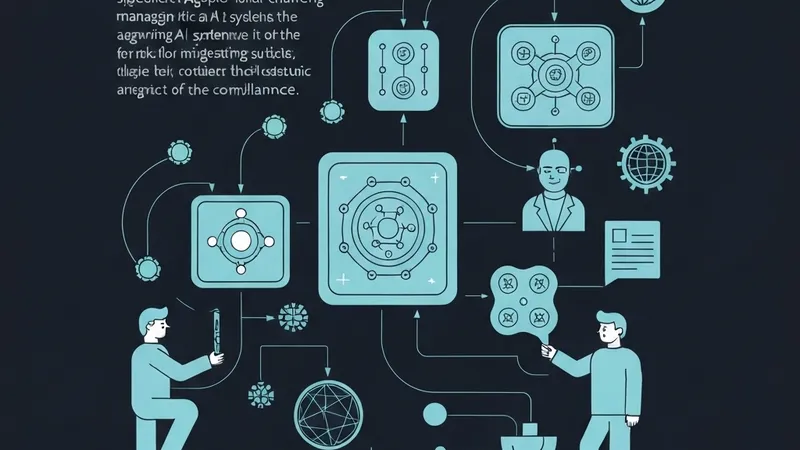
As the EU AI Act nears full enforcement in 2026, the governance of agentic AI systems presents significant challenges. To effectively mitigate high levels of risk, organizations must adopt several key measures, including robust agent identity verification, comprehensive logging of activities, strict policy checks, adequate human oversight, mechanisms for rapid revocation, availability of documentation from vendors, and the formulation of evidence for regulatory submissions.
Decision-makers have various options to establish a clear record of activities undertaken by agentic systems. For instance, a Python SDK like Asqav can cryptographically sign each agent’s action and link all records to an immutable hash chain, a technique reminiscent of blockchain technology. Any alteration or removal of a record would cause the chain verification to fail. For governance teams, utilizing a verbose, centralized, and potentially encrypted system of record for all agentic AIs offers a superior data trail compared to the scattered text logs generated by individual software platforms.
Irrespective of the technical specifics of record-keeping, IT leaders require precise visibility into where, when, and how agentic instances are operating across the enterprise—a fundamental step often overlooked in recording automated, AI-driven activity. It is essential to maintain a registry for every operational agent, each uniquely identified, alongside records of its capabilities and granted permissions. This 'agentic asset list' directly supports the requirements of the EU AI Act's Article 9, which mandates that for high-risk areas, AI risk management must be an ongoing, evidence-based process integrated into every stage of deployment (development, preparation, production) and subject to continuous review.
Furthermore, decision-makers must be cognizant of the Act’s Article 13: high-risk AI systems must be designed to enable deployers to understand the system's output. This implies that third-party AI systems must be interpretable by their users (not merely opaque code blobs) and furnished with sufficient documentation to ensure safe and lawful use. This requirement makes the choice of model and its deployment methods both technical and critical regulatory considerations.