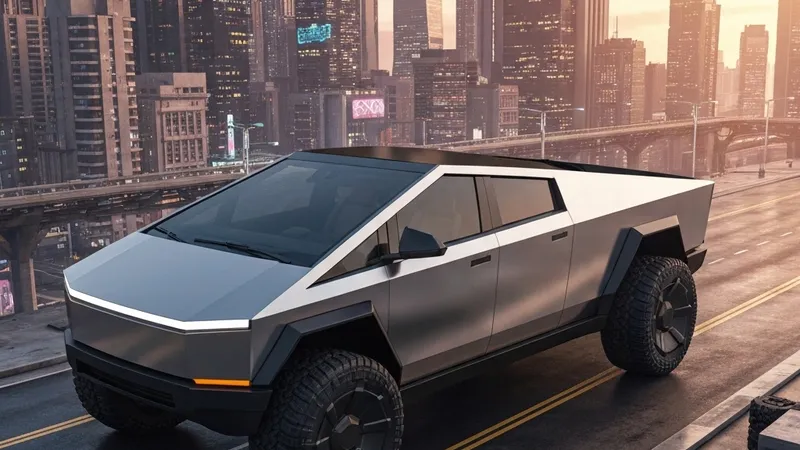
For nearly nine years, Elon Musk has championed a futuristic concept: a flying or hovering Tesla Roadster. This hovering capability is part of a novel system designed to deliver unprecedented acceleration, while also enhancing high-speed cornering and braking. These extraordinary features are enabled by SpaceX cold gas thrusters, which will replace the rear seats with specialized SpaceX compressed air tanks.
The journey began with the unveiling of a Roadster prototype in 2017. Musk took to Twitter in 2018 to detail the SpaceX option package, which would feature "10 small rocket thrusters arranged seamlessly around the car." Interestingly, last year it was revealed that OpenAI CEO Sam Altman placed a $45,000 preorder back in 2018, only to find Tesla's contact email inactive when he attempted to cancel it years later.
Following years of quiet development, Musk built up anticipation recently. In October last year, he promised an "unforgettable" demo, and by March, he teased that the reveal would be a "banger next-level" event slated for April. However, April passed without incident. During an late-April earnings call, Musk pushed the timeline to late May or early June. Now in June, with still no sign of the car, a report from The Information reveals that the highly anticipated joint Tesla-SpaceX demo has been postponed to at least August.
The upcoming demo is meant to showcase the complex cold gas thruster system, and it appears Tesla is still ironing out the engineering kinks. Interestingly, Musk reportedly received a personal demo of the thruster system in April—just after his confident "next-level" proclamations and immediately before the cascade of delays began.
[AgentUpdate Depth Analysis] The fusion of rocket propulsion with automotive engineering on the Tesla Roadster represents more than just a mechanical marvel; it is a profound frontier for Embodied AI and physical AI Agents. Managing ten micro-thrusters in real-time alongside variable traction and high-velocity aerodynamics demands an AI control loop operating at microsecond latencies. This shifts the paradigm of autonomous driving from simple lane-keeping to complex, non-linear physical system coordination. The engineering delays underscore the immense friction of bridging digital intelligence with chaotic physical dynamics. Ultimately, mastering such high-dimensional controls will pave the way for next-generation physical agents that seamlessly negotiate and manipulate the physical world far beyond traditional robotic boundaries.