Russian universities are actively dangling enticements such as free tuition and up to $70,000 to persuade students to sign up as military drone pilots for a year. While recruitment campaigns argue that these recruits can avoid the risk of direct frontline combat in Ukraine, reality paints a different picture, with at least one confirmed battlefield death and potentially more among this new cohort of student drone pilots.
According to Bloomberg, pamphlets outlining these specific military contracts were distributed at the prestigious Bauman Moscow State Technical University. To further sweeten the deal, other universities have offered incentives such as tax holidays, loan forgiveness, and even free land. The independent magazine Groza tracked at least 270 Russian academic institutions actively promoting military contracts to their students as the conflict enters its fifth year since the full-scale invasion of Ukraine in February 2022.
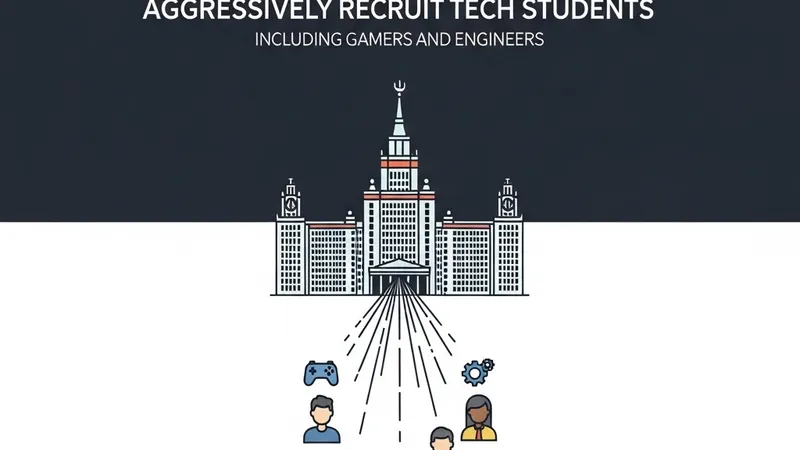
This aggressive recruitment drive targets a pool of roughly 2 million male college students in Russia, focusing heavily on gamers and tech-savvy students whose skills make them ideal candidates for rapid drone-pilot training. Reports from NBC News indicate that Russia’s Defense Ministry is explicitly looking for recruits with experience in flying quadcopters, model aircraft, electronics, radio engineering, and general computer literacy.
However, this short-term military fix risks severely crippling Russia's future tech workforce, compounding an ongoing brain drain. A study revealed that up to 24 percent of top Russian software developers active on GitHub fled the country within the first year of the war alone. Student sentiment remains largely skeptical. "No one wants to join," a student named Andrey told NBC News. "No one is interested."
Despite the domestic pushback, Moscow is doubling down to achieve its ambitious target of field-deploying 168,000 drone operators by the end of 2026, as reported by the Kyiv Independent. In doing so, Russia is attempting to replicate the tactical success of Ukraine's Unmanned Systems Force, which stands as the world's first independent military branch dedicated entirely to drone warfare.
[AgentUpdate Depth Analysis] Russia's mobilization of tech-savvy university students for drone operations underscores an urgent demand for human-machine synergy in modern conflict. From the perspective of the AI Agent ecosystem, however, relying heavily on human pilots is merely a transitional phase. The future of edge-computing robotics is rapidly shifting toward autonomous drone swarms powered by Embodied AI Agents. As lightweight, multimodal models mature, future UAVs will possess on-device reasoning, local perception, and decentralized swarm coordination capabilities, largely eliminating the need for real-time human piloting. This geopolitical development also sounds an alarm for the global AI community: open-source AI Agent frameworks designed for civilian robotics are increasingly vulnerable to rapid weaponization, making the establishment of strict safety guardrails and alignment standards a critical priority for the entire ecosystem.