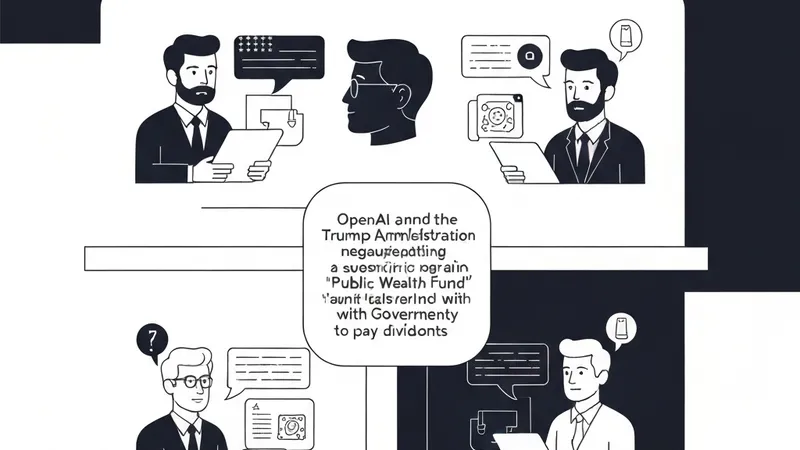
OpenAI and the Trump administration have been negotiating a government stake in the AI startup for over a year, with CEO Sam Altman reportedly first floating the idea in 2025.
Under the discussed framework, OpenAI could hand over shares to the government to build a "Public Wealth Fund" that would pay out directly to American citizens. While no official terms have been finalized, Trump noted that the public could "essentially become a partner" and indicated that negotiations should advance in the near future. Private investors currently value OpenAI at over $850 billion as the company gears up for its highly anticipated IPO.
Senator Bernie Sanders confirmed he has discussed the sovereign fund concept with Altman and plans to introduce the "American A.I. Sovereign Wealth Fund Act" soon. The bill would impose a one-time 50% tax on shares of the largest AI companies, granting the government voting rights and board seats, with returns flowing back to citizens. Sanders argues that since AI is built on humanity's collective knowledge, its wealth shouldn't only benefit tech billionaires. Both OpenAI and rival Anthropic have proposed similar fund concepts.
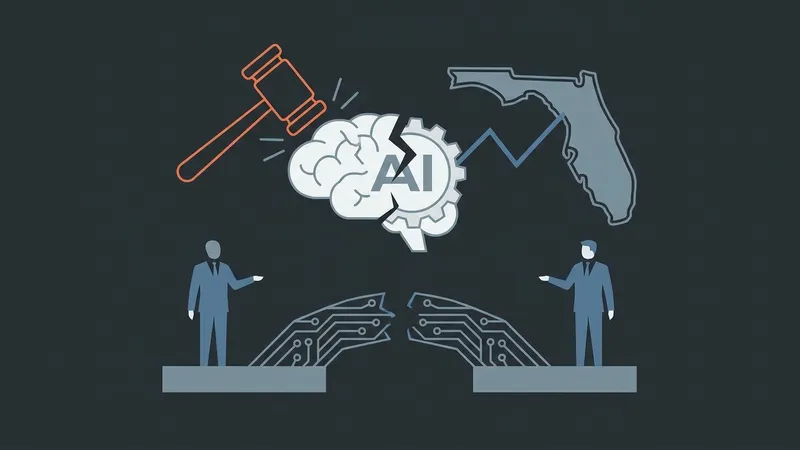
For OpenAI, aligning with the government prior to its IPO serves as a formidable political shield against future regulatory crackdowns. For the administration, it offers a mechanism to exert influence over a critical sector without congressional gridlock. However, critics warn this setup mirrors the "too big to fail" dynamics of the 2008 financial crisis. If the state holds equity, it has a direct incentive to bail out cash-burning AI giants with taxpayer dollars if things go south. Despite soaring revenues, both OpenAI and Anthropic continue to burn massive capital, leaving long-term profitability an open question.
[AgentUpdate Depth Analysis] This negotiation represents a seismic shift from commercial AI competition to a form of state-sponsored capitalism. For the AI Agent ecosystem, this is not just a financial restructuring but a fundamental realignment of infrastructure and compliance boundaries. If OpenAI secures state backing, its proprietary Agent technologies will gain unprecedented regulatory greenlights and sovereign-level distribution. However, this also risks stifling decentralized innovation. Independent Agent developers will face an ecosystem dominated by a state-aligned monopoly with heavily tilted rules. Future Agent competition may rely less on raw algorithmic superiority and more on regulatory compliance, sovereign data access, and political immunity, potentially forcing the open-source Agent community to accelerate toward decentralized frameworks to survive.