OpenAI is significantly enhancing its developer tool, Codex, enabling the AI to autonomously control a Mac, generate images, retain preferences, and persist on tasks for weeks. This strategic upgrade directly challenges Anthropic's Claude Code.
OpenAI has rolled out a major update for Codex, expanding its capabilities far beyond a traditional terminal and editor. The standout feature, "background computer use," allows Codex to interact with any application on a user's machine by observing the screen, performing clicks, and typing with its own virtual cursor, as confirmed by OpenAI.
Multiple Codex agents can now run in parallel on a Mac without disrupting other user activities. OpenAI highlights its utility for front-end development iterations, application testing, and interacting with programs lacking APIs. Currently, this feature is exclusive to macOS.
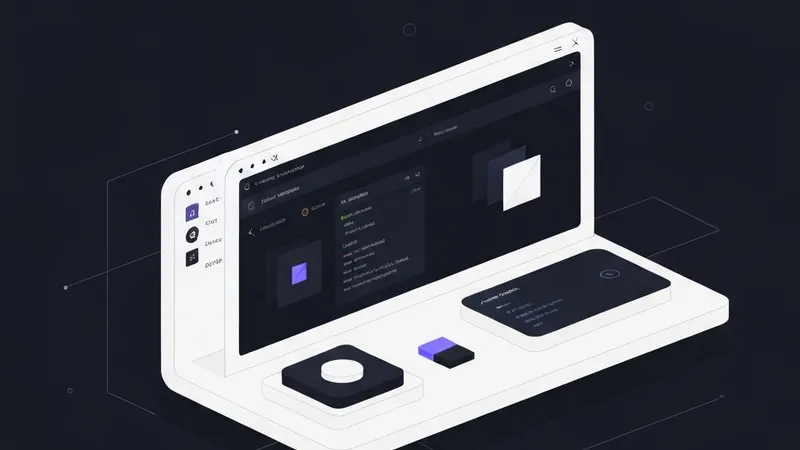
The Codex app integrates a built-in browser, enabling users to comment directly on web pages to provide specific instructions to the agent. While currently focused on front-end and game development, OpenAI intends to evolve this feature for full browser control beyond local web applications.
Codex Evolves into a Comprehensive Software Development Companion
This update significantly broadens Codex's support across the software development lifecycle. For instance, Codex can now edit GitHub review comments, manage multiple terminal tabs concurrently, and connect to remote devboxes via SSH in its alpha phase.
OpenAI has also enhanced automation capabilities, allowing reuse of existing conversation threads to maintain context. Codex can now self-schedule future tasks and autonomously resume long-term projects, potentially spanning "days or weeks," as stated by OpenAI.
These automation features enable teams to streamline various operations, including processing open pull requests, tracking tasks, and monitoring communications across platforms like Slack, Gmail, and Notion.
Image Generation and Over 90 New Plugins
Codex now incorporates gpt-image-1.5 for image generation. This integration, alongside screenshots and code, empowers teams to conceptualize and iterate on product designs, front-end interfaces, mockups, and game graphics within a unified workflow.
OpenAI has released over 90 new plugins, encompassing various skills, app integrations, and MCP servers. Notable additions include Atlassian Rovo for JIRA, CircleCI, CodeRabbit, GitLab Issues, Microsoft Suite, Databricks' Neon, Remotion, Render, and Superpowers. These plugins enhance Codex's ability to extract context from diverse tools and execute actions directly.
Phased Rollout with Regional Limitations
The updates are being rolled out immediately to Codex desktop app users authenticated via a ChatGPT account. Personalization features, such as context-aware suggestions and memory, will soon become available to Enterprise, Edu, EU, and UK users. The computer use functionality is currently restricted to macOS and will be extended to EU and UK users at a later time.