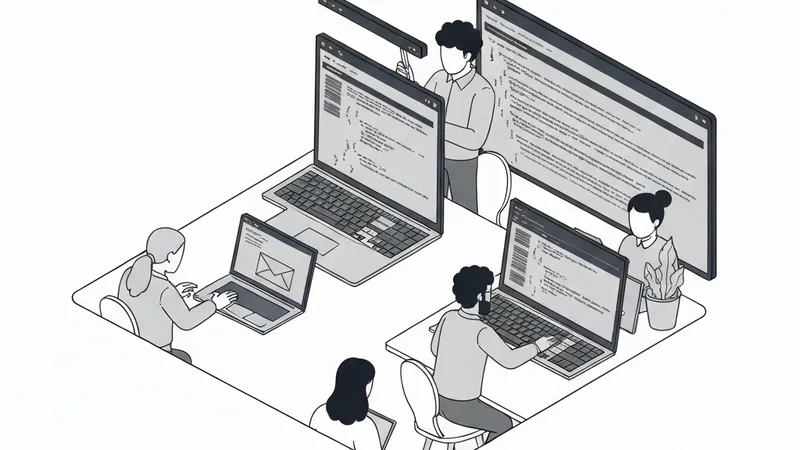
Many developers are still navigating AI-assisted workflows with methods reminiscent of 2023, often involving cumbersome, repetitive tasks. A common scenario during debugging, for instance, includes constant tab-switching between an AI chat, pasting errors, reading responses, then copying stack traces from monitoring tools, pasting them back into the chat, and finally copying relevant code snippets from the IDE for further analysis. This inefficient cycle repeats, regardless of the AI model used, be it ChatGPT, Claude, Codex, or Gemini.
This workflow inefficiency mirrors using a mobile phone in 2010 – functional but slow and clearly a generation behind existing capabilities. A significant protocol shift is currently underway in AI tooling, yet many developers remain unaware of its transformative potential.
Consider the evolution of physical connectors. In an average household, old cable drawers are filled with obsolete connectors: Mini USB, Micro USB, Apple 30-pin, proprietary Samsung cables, and various barrel chargers. Each served a specific device, rendering it useless for others. USB-C didn't offer an instant fix but gradually became the universal standard, powering laptops, phones, headphones, and monitors with a single connector. This eliminated the need for a cluttered cable drawer.
AI tooling is experiencing a similar pivotal moment. For years, every AI integration was a bespoke solution. Integrating an AI assistant with Notion required a custom plugin, with its own authentication, schema, and quirks specific to that vendor's system. Querying a database with a different model meant another distinct system. Automating tasks with Slack involved building function-calling wrappers, manually defining schemas, hosting, and handling authentication. Switching between models like ChatGPT, Claude, or a local model often necessitated re-engineering the entire integration from scratch.
Each "AI integration" was a custom build, forcing developers to repeatedly solve the same five fundamental problems: authentication, schema definition, transport mechanisms, tool descriptions, and error handling. This repetitive burden across hundreds of SaaS tools and multiple model vendors highlighted a severe lack of standardization. Then, the Model Context Protocol (MCP) emerged, proposing a unified framework for these integrations.
At its core, MCP is a protocol designed to standardize how AI clients (such as Claude, ChatGPT, Codex, Gemini, or Cursor) interact with external tools and data, aiming to eliminate the complexities of bespoke integrations and usher in an era of seamless, universal AI tool compatibility.