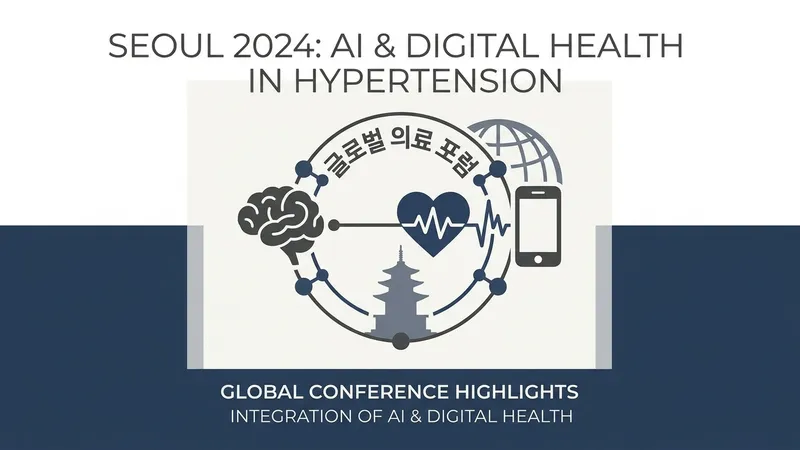
The recent Korean Medical Conference highlighted a significant leap forward in integrating digital health and artificial intelligence (AI) into everyday primary care. The discussions focused on how technology can directly enhance the efficacy of chronic disease management, specifically targeting hypertension.
A major highlight of the event was the release of the 'Hypertension Synopsis 30', a new standardized guide designed to help primary care clinics manage chronic hypertension more effectively. This initiative represents a sophisticated fusion of traditional medical guidelines with modern innovation, ensuring that clinics have access to streamlined, evidence-based management tools.
The conference showcased the active introduction of AI technologies in primary care settings. Specifically, advancements in AI-driven ultrasound diagnostics and cardiovascular disease prediction models were presented as game-changers. These tools allow practitioners to move beyond reactive care toward a more predictive and preventive approach, leveraging data to forecast cardiovascular risks with higher accuracy.
Furthermore, the sessions successfully merged practical at-home medical care strategies with cutting-edge digital health solutions. By utilizing digital monitoring tools, the medical community aims to bridge the gap between clinical visits and daily patient life, ensuring continuous management of hypertension. The integration of these AI applications signifies a new era of intelligent healthcare delivery for primary practitioners.