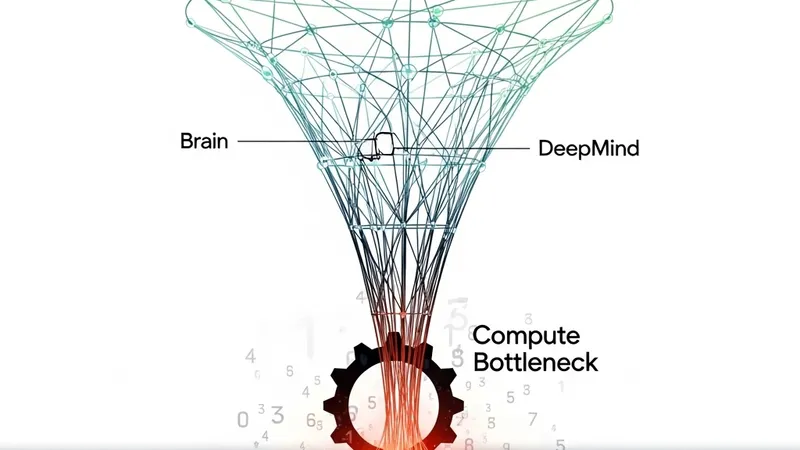
Within the high-stakes environment of artificial intelligence development, Google's internal research teams are engaged in a fierce competition for a vital commodity: computing power. Sources familiar with the matter indicate that as the demand for training the next generation of Gemini models sky-rockets, researchers are finding themselves in a constant struggle to secure access to the company's limited pool of GPUs and TPUs.
The merger of Google Brain and DeepMind into the unified Google DeepMind unit was intended to streamline efforts and rival OpenAI. However, consolidating these world-class teams has not solved the underlying hardware bottleneck. Under the leadership of Demis Hassabis, the organization is forced to prioritize projects, often favoring flagship models with immediate commercial potential. This strategic shift has left some veteran researchers feeling sidelined, as fundamental science and experimental projects are increasingly deprioritized in favor of scaling Gemini.
Resource allocation has become a significant point of internal friction, requiring senior staff to lobby executive leadership or present rigorous justifications to internal "compute councils" to secure hardware quotas. As competitors like Microsoft and Anthropic continue to push the boundaries of model scale, Google's internal struggle highlights a universal challenge for tech giants: even with proprietary silicon like TPUs, hardware capacity remains the ultimate limiting factor for AI innovation and research autonomy.