In the evolving ecosystem of Claude Code, developers encounter three distinct and fundamental extension mechanisms: the Model Context Protocol (MCP), Skills, and Hooks. While these mechanisms might appear related at a glance, they operate at fundamentally different architectural layers and serve unique purposes within an AI agent system.
Understanding their hierarchical relationship is key to effective development:
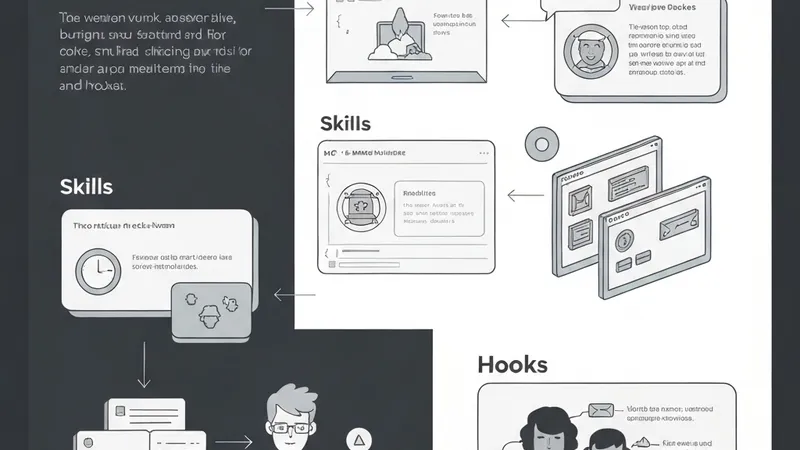
- Hooks (Bottom Layer): Focused on lifecycle event automation, Hooks define "what must always happen." They ensure specific, predetermined actions are executed reliably in response to system events, forming the bedrock of automated processes.
- MCP (Middle Layer): The Model Context Protocol facilitates external tool connections through an open standard. It addresses "what can be done" by enabling AI agents to interact with and leverage external services and resources in a structured manner.
- Skills (Top Layer): Representing reusable workflows and encapsulated domain knowledge, Skills tackle "how to do things well." They empower AI agents to perform complex tasks efficiently and intelligently by providing structured methods and expertise.
This comprehensive guide aims to provide tech professionals with a clear understanding and practical application strategy for these extension mechanisms. The detailed coverage includes:
- An in-depth analysis of the three-layer architecture, illustrating the interdependencies between Hooks, MCP, and Skills.
- A side-by-side comparison across eight critical dimensions, highlighting their unique characteristics and differentiators.
- Practical demonstrations of the same task implemented using each of the three different mechanisms.
- A robust decision framework designed to guide developers in selecting the most appropriate extension based on specific project requirements.
- Insights into common mistakes and strategies for avoiding them, thereby enhancing development efficiency and reliability.