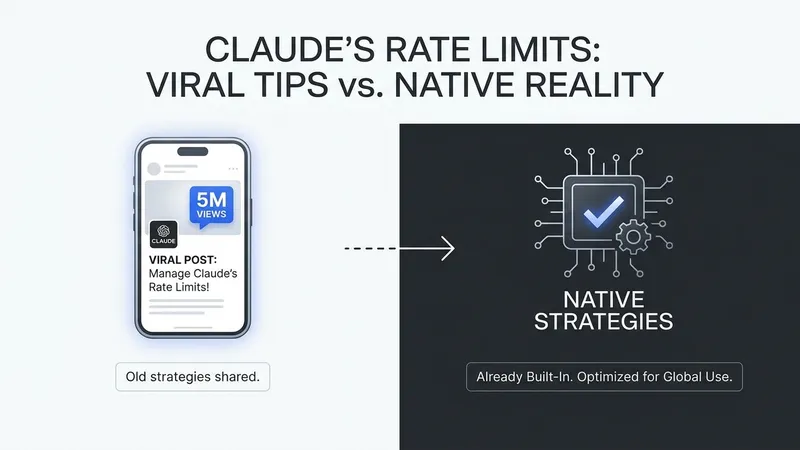
A recent viral social media post with over 5 million views highlighted clever workarounds to optimize Claude's rate limits and usage costs. However, this insightful analysis reveals that for developers using Anthropic's official CLI tool, Claude Code, these manual tips are already native features that can be automated via the CLAUDE.md configuration file.
CLAUDE.md acts as a project-specific or global configuration file that Claude Code reads automatically at the start of every session. By leveraging this file, developers can embed persistent instructions directly into the AI's environment, eliminating the need for repetitive prompt engineering.
A primary takeaway is cost optimization. By defining strict model usage policies within CLAUDE.md, users can prevent the CLI from automatically upgrading to the expensive Opus model, forcing it to default to Sonnet for routine tasks. This ensures significant cost savings without sacrificing performance for standard coding updates.
Furthermore, core principles of efficiency—such as splitting complex tasks and minimizing context windows—can be hardcoded into the configuration. Instead of manually reminding the LLM to stay concise, the CLAUDE.md file provides a framework that directs Claude to manage context intelligently and break down monolithic requests into manageable sub-tasks.
Ultimately, CLAUDE.md transforms viral "hacks" into a professional, automated workflow. It allows developers to maintain strict adherence to project-specific coding styles, testing protocols, and deployment rules, ensuring that every session with Claude Code is as cost-effective and context-aware as possible.