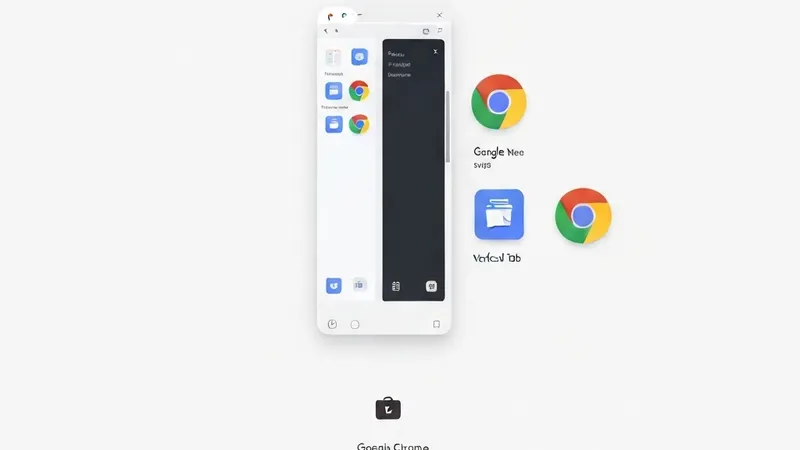
After years of user demand and competitive pressure, Google Chrome is finally adopting vertical tabs, a feature recently popularized by modern browsers like Arc, which is a predecessor to the AI browser Dia. Google announced on Tuesday that Chrome users will now have the option to enable vertical tabs, which will move tabs to the side of the browser window, significantly simplifying the ability to read full page titles and manage tab groups.
Once activated, vertical tabs will remain the default setting until the user manually reverts the change. This update is rolling out alongside a refreshed version of Chrome's Reading Mode, its distraction-free, text-focused reading experience.
These changes reflect how growing competition from modern browsers, including those from AI makers, has influenced Chrome's development. It also potentially limits the appeal of rivals aiming to differentiate their browsers with features Chrome previously lacked.
The company notes that the new vertical tabs can be enabled at any time by right-clicking on a Chrome window and selecting “Show Tabs Vertically.” Google states there’s no hard limit on the number of tabs that can be opened, beyond what would already be restricted by the user’s hardware. Vertical tabs function identically to horizontal tabs, meaning users can have different Chrome windows with their own distinct sets of tabs or tab groups.
Users who typically prefer vertical tabs are often power users or researchers who regularly keep many open tabs in their browser. These individuals frequently encounter difficulty finding the right tab when their browser becomes crowded, a problem exacerbated when multiple tabs from the same site share an identical favicon. Vertical tabs aim to resolve this pain point.
This is not Google's first foray into side-mounted tabs. The company tested a similar feature over a decade ago, but it never progressed beyond beta. This time, however, development has advanced significantly, with savvy users already able to activate the option by enabling a flag in recent Chrome builds. Google's decision to push this feature forward was likely influenced by increasing interest in alternative web browsers like Arc and others from AI developers, which aim to entice Chrome users to switch platforms.
In recent months, Chrome has been actively rolling out updates, including Gemini AI integration, autofill improvements, and a Split View mode, in addition to announcing a faster release schedule. The vertical tabs feature is gradually being rolled out to users in all markets.
Alongside the launch of vertical tabs, Chrome is also deploying a new Reading Mode experience. This updated mode will offer a full-page interface designed to further reduce on-screen clutter, allowing users to focus more effectively on text. This will become the new default experience for Chrome users, arriving at a time when web pages, particularly those on news sites, have become increasingly cluttered with ads and subscription prompts.