Developers are convinced that AI coding assistants make them faster. However, data tells a different story entirely. In one of the most striking findings to emerge from software engineering research in 2025, experienced programmers using frontier AI tools actually took 19% longer to complete tasks than those working without assistance. Yet, those same developers believed the AI had accelerated their work by 20%.
This perception gap represents more than a curious psychological phenomenon. It reveals a fundamental disconnect between how developers experience AI-assisted coding and what actually happens to productivity, code quality, and long-term maintenance costs. The implications extend far beyond individual programmers, reshaping how organizations measure software development performance and how teams should structure their workflows.
The Landmark Study That Challenged Everything
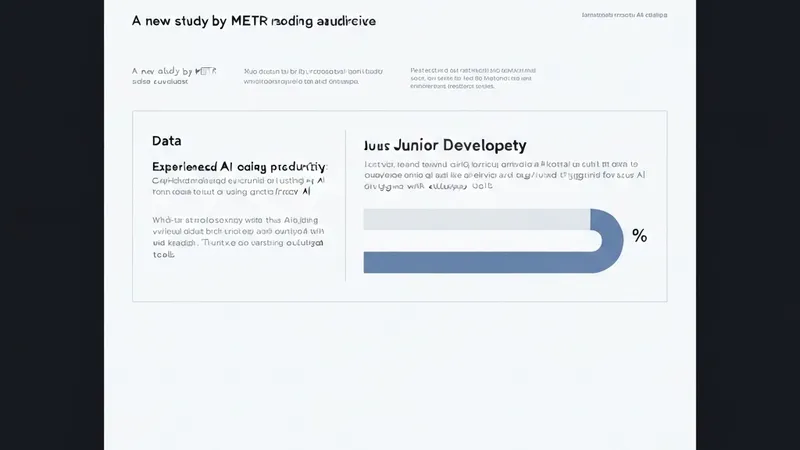
The research that exposed this discrepancy came from METR, an AI safety organization that conducted a randomized controlled trial with 16 experienced open-source developers. Each participant had an average of five years of prior experience with the mature projects they worked on. The study assigned 246 tasks randomly to either allow or disallow AI tool usage, with developers primarily using Cursor Pro and Claude 3.5/3.7 Sonnet when permitted.
Before completing their assigned issues, developers predicted AI would speed them up by 24%. After experiencing the slowdown firsthand, they still reported believing AI had improved their performance by 20%. The objective measurement showed the opposite: tasks took 19% longer when AI tools were available.
This finding stands in stark contrast to vendor-sponsored research. GitHub, a subsidiary of Microsoft, published studies claiming developers completed tasks 55.8% faster with Copilot. A multi-company study spanning Microsoft, Accenture, and a Fortune 100 enterprise reported a 26% productivity increase. Google's internal randomized controlled trial found developers using AI finished assignments 21% faster.
The contradiction isn't necessarily that some studies are wrong and others correct. Rather, it reflects different contexts, measurement approaches, and crucially, different relationships between researchers and AI tool vendors. The studies showing productivity gains have authors affiliated with companies that produce or invest in AI coding tools. Whilst this doesn't invalidate their findings, it warrants careful consideration when evaluating claims.
Why Developers Feel Faster Whilst Moving Slower
Several cognitive biases compound to create the perception gap. Visible activity bias makes watching code generate feel productive, even when substantial time disappears into reviewing, debugging, and correcting that output. Cognitive load reduction from less typing creates an illusion of less work, despite the mental effort required to scrutinize AI-generated content.