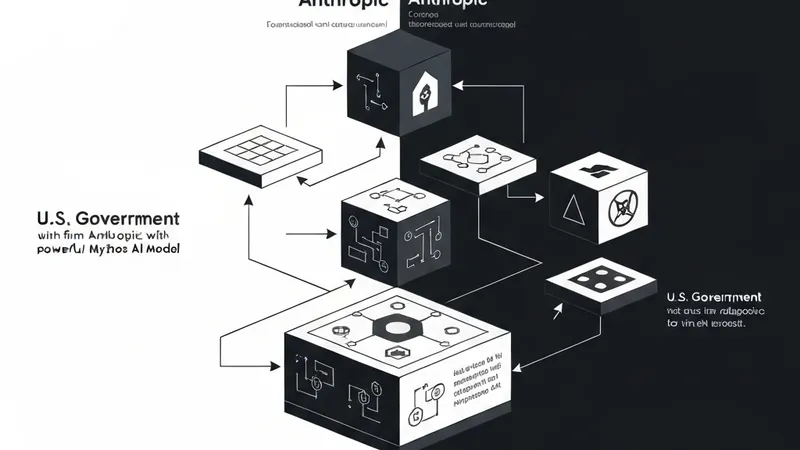
The U.S. government's dispute with #Anthropic has intensified, particularly with the revelation of Mythos, Anthropic’s AI model, possessing formidable cyber capabilities. The White House is now navigating a delicate balance: leveraging and securing Mythos for #national security, restricting its broader availability, and avoiding any perceived retreat from the Pentagon's firm stance simultaneously.
The White House is actively opposing Anthropic’s proposal to significantly increase private sector access to its Mythos AI, from approximately 50 to nearly 120 firms. This opposition stems from U.S. officials' concerns over potential #compute resource strains, which could impact the government's own use. This development unfolds as a national security memo is being prepared to address elements of the ongoing Pentagon feud.
A forthcoming White House AI memo is expected to advocate for multi-vendor AI adoption across agencies and may alleviate some of Anthropic's initial concerns. Axios reports this could "allow agencies to get around the supply chain risk designation," despite current legal challenges. Furthermore, former AI czar David Sacks observed that GPT 5.5 has achieved cyber capabilities comparable to Mythos, predicting all frontier models will reach this level within six months.
This evolving stance on Anthropic by the White House appears largely driven by its own desire for enhanced access to the powerful Mythos model. However, internal government divisions persist, highlighted by Secretary of War Pete Hegseth's public criticism that Anthropic is "run by an ideological lunatic," underscoring the friction between potential reconciliation and ongoing confrontation.