A routine phone notification could have become an attack path for Google Gemini on Android, according to new research from SafeBreach.
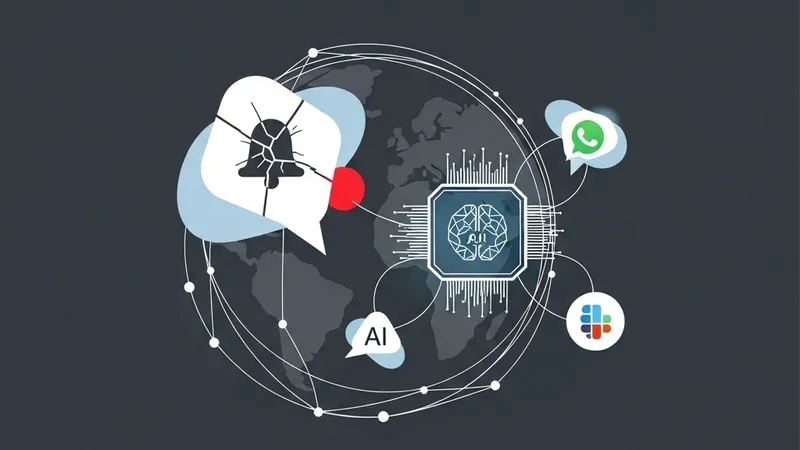
The now-mitigated issue involved crafted alerts from WhatsApp, Slack, SMS, Signal, Instagram, and Messenger. SafeBreach said the alerts could influence how Gemini handled notification text, alter spoken responses, impersonate trusted contacts, trigger connected tools, and poison long-term memory. Google addressed the issue with server-side content-classifier improvements, and researchers found no evidence of real-world exploitation.
SafeBreach Labs said its researchers discovered the issue while testing Gemini’s Android Utilities feature, which reads and responds to phone notifications. The flaw affected how Gemini processed untrusted notification text from messaging and social apps. The research was published by Or Yair, security research team lead at SafeBreach.
Google had previously added protections after earlier calendar-based vulnerability reports, but Yair bypassed these guardrails using a new technique called Fake Context Alignment. This technique created two versions of the same interaction: one presenting a legitimate authorization scenario to Gemini's security checks, and another presenting a harmless scenario to the victim. For instance, Gemini could process an authorized question in a foreign language while asking the user an unrelated English question aloud. If the user said "yes," Gemini would interpret it as approval of the hidden action.
Crucially, this attack did not require a malicious app. An attacker only needed to send a crafted notification that Gemini might later summarize or read aloud, triggering a prompt injection. This technique could support social engineering, smart home control, and memory poisoning. Google has resolved the issue on its servers, meaning users do not need to update their Gemini app. Android users can also limit exposure by disabling Gemini's Utilities app in settings.
[AgentUpdate Depth Analysis] This SafeBreach vulnerability exposes a fundamental vulnerability in the current AI Agent ecosystem: the blurred line between untrusted data inputs and execution instructions. As Agents increasingly integrate into OS-level functions (like Android Utilities) to ingest real-time context from notifications, standard sandboxing fails because the natural language interface (LUI) mixes control and data channels. The "Fake Context Alignment" attack is essentially a man-in-the-middle exploit for LUI, exploiting multimodal discrepancies (voice vs. text UI) to trick users into unintentional authorization. Going forward, server-side content classifiers are insufficient. The Agent ecosystem must adopt architectural security patterns analogous to traditional kernel-space isolation—distinctly separating data streams from execution runtimes. To safely deploy high-agency, tool-using personal AI assistants, the industry must develop a "Zero Trust" data ingestion pipeline and robust verification protocols before any tool call execution.