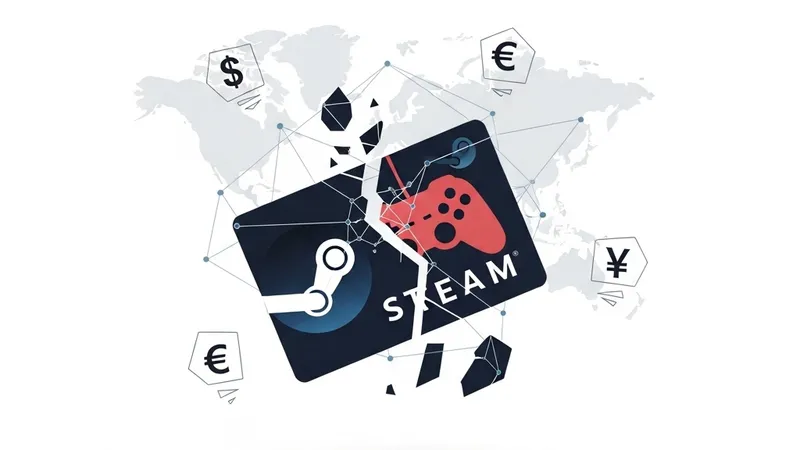
Valve is officially ending its physical retail gift card program, effectively severing its last link to the brick-and-mortar retail world. When Steam was first announced back in 2002, Valve's CEO Gabe Newell pitched it as a way to bypass traditional retailers altogether, eliminating the overhead of physical goods distribution while leveraging broadband efficiency to boost margins and customer service.
Decades later, physical gift cards remained a substantial legitimate market, acting as a crucial gateway for gamers to convert cash into digital Steam funds. In early 2024, Valve revealed that physical gift cards brought in a massive $80 million in redemptions during the final 11 days of 2023 alone—a revenue stream that Valve noted was of "massive benefit to developers."
However, the operational costs became unsustainable. Valve previously admitted that physical cards are among the most expensive payment methods they support, largely driven by physical printing, logistics, and heavy customer support overhead dedicated to assisting victims of retail scams. While Valve will forego a portion of retail revenue, it will now completely focus on digital transactions. Gamers can still buy digital gift cards directly from Steam or use prepaid debit cards tied to verified addresses.
[AgentUpdate Depth Analysis] Valve’s departure from physical gift cards signals a broader transition toward purely digital payment rails, carrying critical implications for the emerging AI Agent economy. As autonomous agents increasingly act as economic entities handling micro-transactions, legacy physical-to-digital bridges like gift cards present massive #security loopholes and friction points. AI Agents require frictionless, programmatic, and instantly verifiable transaction protocols, making physical mediums obsolete. This shift underscores the critical need for AI-native payment solutions—such as programmable stablecoins or secure APIs—to eliminate physical-world fraud and overhead. For developers building the next generation of autonomous workflows, integrating secure, agent-ready digital transaction layers is no longer optional but a foundational requirement for sustainable agent-to-agent and agent-to-platform commerce.