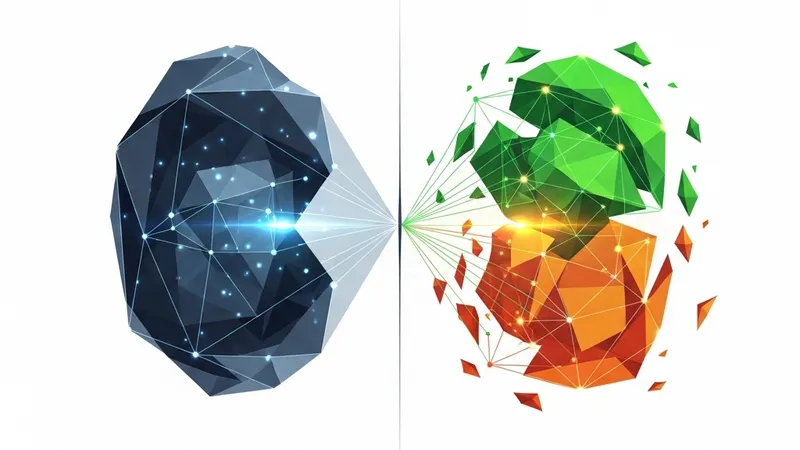
A significant divergence in AI model development and release strategies is evident between the world's two major economies: China and the United States. China is actively promoting and utilizing open-source weight models, fostering broader community participation and technological sharing. Conversely, leading US AI companies like OpenAI and Anthropic predominantly adopt closed-source strategies, maintaining proprietary control over their core model technologies.
Addressing this trend, Tiezhen Wang, former APAC Ecosystem Executive at Hugging Face, offered his unique perspective. He noted that while companies like OpenAI accuse their Chinese counterparts of “model distillation,” this practice itself should be viewed as neutral. Wang argues that US AI giants train their models on vast amounts of public internet information and are not original creators of knowledge. Therefore, their attempts to prevent others from reusing this knowledge appear contradictory and ironic.
Wang further advocates that all AI-generated content should be considered copyright-free. He warns that granting #copyright to AI-generated content could allow a few powerful companies, possessing immense compute power, to abuse their authority by endlessly generating and combining content to monopolize intellectual property, thereby creating an unfair competitive landscape.
Interestingly, Wang also observed a distinct difference in token usage strategies between Chinese and US companies. Due to the abundance of lower-cost open-source weight models in the Chinese market, the cost of token usage is significantly lower than in the US. This encourages Chinese internet companies to actively promote maximizing token usage among employees, cultivating them to become true AI-native developers. In some instances, employees are even prohibited from manually completing routine tasks like document writing, mandated instead to leverage AI tools for deeper integration and efficiency gains.
[AgentUpdate Depth Analysis]
Tiezhen Wang's insights underscore the profound implications of open-source versus closed-source strategies for the AI Agent ecosystem. China's embrace of open-source models, coupled with incentivized token maximization, heralds a more open, experimental, and cost-effective environment for Agent development. This approach could accelerate the creation and iteration of complex, multi-modal autonomous agents without the burden of high API costs. For instance, agents built atop open models like Llama 3 or Qwen offer unparalleled customizability, auditability, and data sovereignty, making them ideal for enterprise deployments and specialized industry applications. In contrast, agents reliant on closed models like GPT-4, while powerful, face vendor lock-in, privacy concerns, and high operational costs, pushing developers towards efficiency rather than boundless exploration. Furthermore, the absence of copyright for AI-generated content would significantly foster the free flow and reuse of agent-created outputs, laying a crucial foundation for inter-agent collaboration, knowledge sharing, and overall ecosystem prosperity, circumventing potential legal bottlenecks. Long-term, China's strategy could cultivate a more diverse and resilient AI Agent ecosystem, particularly impactful in scenarios demanding deep customization and high-frequency interaction.