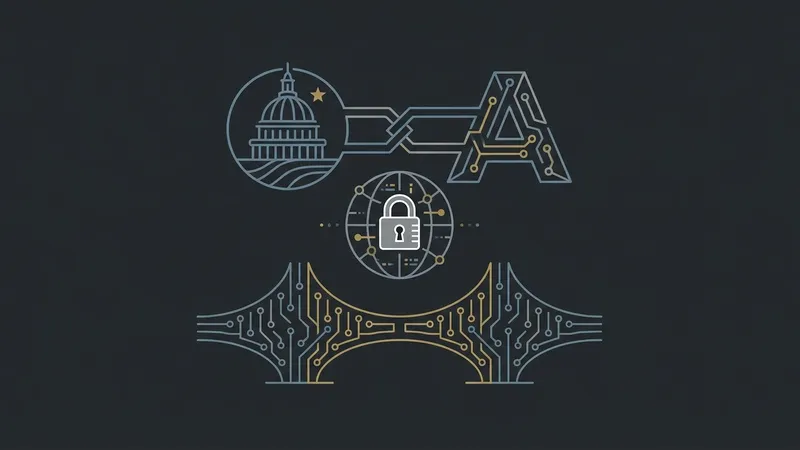
With the explosive growth of artificial intelligence, particularly the rapid practical deployment of autonomous AI Agents, potential national security risks have drawn intense regulatory scrutiny. Recently, the U.S. government unveiled rigorous new national security and cybersecurity compliance standards for frontier AI models. In response, Anthropic has announced a deep technical collaboration with the National Institute of Standards and Technology (NIST) and the US AISI to ensure its flagship Claude models comply with these strict regulatory baselines.
The core of this partnership focuses on rigorous red-teaming evaluations for "catastrophic risks." Unlike traditional model testing that limits itself to static text interactions, current evaluations target autonomous capabilities in cyberoffensive operations and chemical, biological, radiological, or nuclear (CBRN) hazards. Since #Anthropic's Claude 3.5 Sonnet introduced the state-of-the-art Computer Use API, allowing the model to interact with real OS environments, the company has had to pioneer new sandboxed execution frameworks and continuous monitoring protocols inside highly secure clouds like AWS GovCloud.
To satisfy these new federal expectations, Anthropic is upgrading its signature Constitutional AI framework by integrating Dynamic Red-Teaming and automated safety pipelines. This ensures that the agent's behavior remains predictable and secure during complex, long-horizon workflows, actively mitigating the risk of "alignment drift" when executing multi-step tasks. In addition, new defensive guardrails have been baked into the base model to enable real-time soft-interception and human-in-the-loop oversight when high-risk operations are triggered.
[AgentUpdate Depth Analysis] The collaboration between the U.S. government and Anthropic over national security standards marks a major milestone: AI Agents are officially transitioning from interesting productivity toys to critical sovereign infrastructure. Unlike static text LLMs, action-oriented Agents pose real-world execution risks. By benchmarking its Computer Use capabilities under federal oversight, Anthropic is building a formidable compliance moat, establishing a precedent that competitors like OpenAI's upcoming Operator and Microsoft's enterprise agent suites must eventually follow. For the global developer community, this regulatory pressure signals that enterprise-grade Agent architectures will bifurcate. Security boundaries, isolated sandboxing, and secure communication protocols like the Model Context Protocol (MCP) can no longer be treated as optional add-ons, but must instead be integrated as "Secure-by-Design" defaults in any enterprise or sovereign AI deployment.