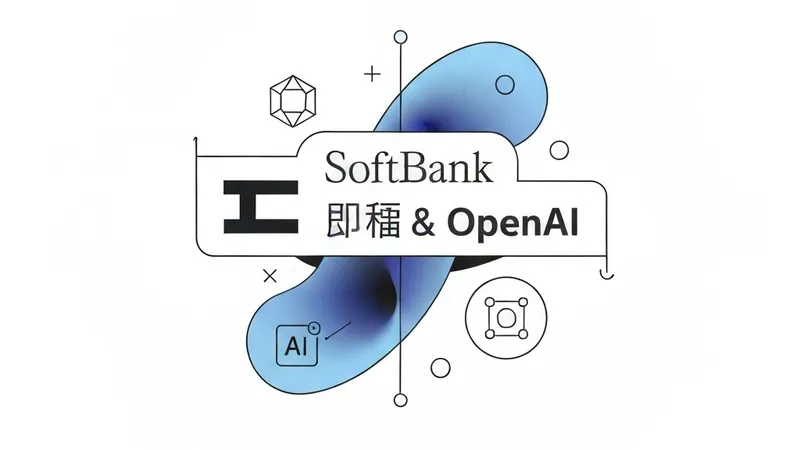
Japanese telecommunications and technology conglomerate SoftBank has announced a strategic partnership with leading Artificial Intelligence (AI) research company OpenAI. The collaboration aims to leverage cutting-edge AI technology to bolster the #cybersecurity defenses of Japan's critical infrastructure, addressing the escalating global threat of cyberattacks that increasingly target essential services like energy, communications, and transportation.
Critical infrastructure globally faces persistent and sophisticated threats from state-sponsored actors, ransomware groups, and other malicious entities. Traditional security measures often struggle to keep pace with novel, complex, and highly stealthy attacks. By integrating #OpenAI's advanced Large Language Models (LLMs) and machine learning capabilities, #SoftBank seeks to establish a more predictive and proactive defense system, capable of real-time anomaly detection, threat forecasting, and even automated response mechanisms.
Specifically, the partnership will focus on utilizing AI for enhanced threat intelligence analysis, identifying anomalous behaviors, pinpointing vulnerabilities, and streamlining automated incident response. OpenAI's models are expected to process vast quantities of network traffic data, log information, and threat reports, swiftly extracting insights and recognizing attack signatures that traditional rule-based systems might miss. SoftBank, in turn, will contribute its extensive network infrastructure, operational expertise, and deployment capabilities across Japan to ensure seamless integration and effective operation of the AI solutions.
Industry experts view AI-driven automated defense as an inevitable future for cybersecurity. This union between SoftBank and OpenAI represents not only a powerful technological synergy but also a significant step in exploring AI's potential applications at a national security level. The initiative is anticipated to commence with pilot programs in key sectors within Japan, with potential for broader adoption and serving as a blueprint for other nations facing similar infrastructure security challenges. It underscores AI's increasingly critical role in safeguarding the physical world.
[AgentUpdate Depth Analysis]
The SoftBank-OpenAI partnership to secure critical infrastructure with AI signals a profound expansion for AI Agents into specialized, high-stakes domains. Unlike traditional cybersecurity solutions from companies like Palo Alto Networks or CrowdStrike that often use narrow AI for specific tasks, this collaboration hints at the development of highly autonomous "intelligent security agents." Powered by advanced LLMs, these agents could possess superior reasoning, planning, and execution capabilities, moving beyond simple detection to proactive threat prediction and automated mitigation under human oversight. This aligns with the vision for advanced AI Agents enabled by frameworks such as LangChain. However, deploying AI agents in critical infrastructure demands rigorous attention to challenges like AI hallucinations, adversarial attacks designed to trick agents, and complex ethical and accountability issues. The future AI Agent ecosystem will necessitate more robust explainable AI (XAI), advanced reinforcement learning, and stringent validation protocols. Successfully addressing these will revolutionize cybersecurity, shifting from reactive postures to proactive, autonomous defense, thereby fortifying the resilience of our digital societies.