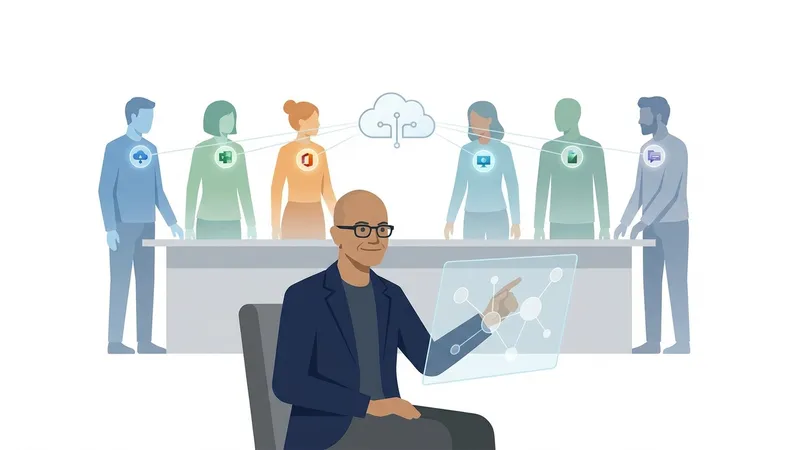
Microsoft CEO Satya Nadella argues that companies should treat AI agents just like human employees. As the software giant scales its internal usage of these autonomous systems, Microsoft is actively defining the operational frameworks and policies needed to manage and oversee its growing virtual workforce.
"You need to give them identities, you need to give them sandboxes, then you need to set policies to govern them," Nadella said during an episode of the "Possible Podcast" hosted by Reid Hoffman. Nadella emphasized that managing agents requires assigning them specific permissions regarding what they can and cannot access within corporate networks, alongside robust systems to audit their actions.
During the podcast discussion, Reid Hoffman also announced that he would be stepping down from Microsoft's board after 10 years to return to what he described as "founder mode." This transition comes at a critical juncture: while enterprises are pouring billions into AI, most are still struggling with how these autonomous agents will collaborate with human workforces.
Nadella shared his personal experience managing these systems, noting that he frequently runs up to 100 AI coding agents simultaneously. As enterprises transition from basic chatbots to massive fleets of specialized agents, creating a rigorous governance layer—akin to corporate IT policy and HR—is becoming a fundamental necessity.
[AgentUpdate Depth Analysis] Nadella’s conceptualization of AI agents as "employees" marks a critical inflection point in the shift from ad-hoc AgentOps to structured enterprise AI governance. While orchestration frameworks like CrewAI and LangGraph have simplified agent creation, scaling them across the enterprise introduces severe security, reliability, and compliance risks. Nadella's formula—integrating identities, sandboxing, policies, and audits—essentially adapts classical Zero Trust security and Identity and Access Management (IAM) to autonomous AI. Moving forward, the true value bottleneck in enterprise AI won’t just be model intelligence, but the robustness of the governance layer. Winners in this space will be platforms that successfully turn chaotic agent behaviors into highly auditable, compliant, and secure corporate digital assets.