With the rapid advancement of open-source LLMs, developers are entering a new era: building localized AI programming assistants that rival commercial APIs, without monthly subscriptions to OpenAI or Anthropic and without risking sensitive data leaks. Historically, cloud-based models like Claude 3.5 Sonnet and GPT-4o dominated code completion and refactoring. However, the release of Qwen2.5-Coder-32B and DeepSeek-Coder-V2 has fundamentally shifted this landscape.
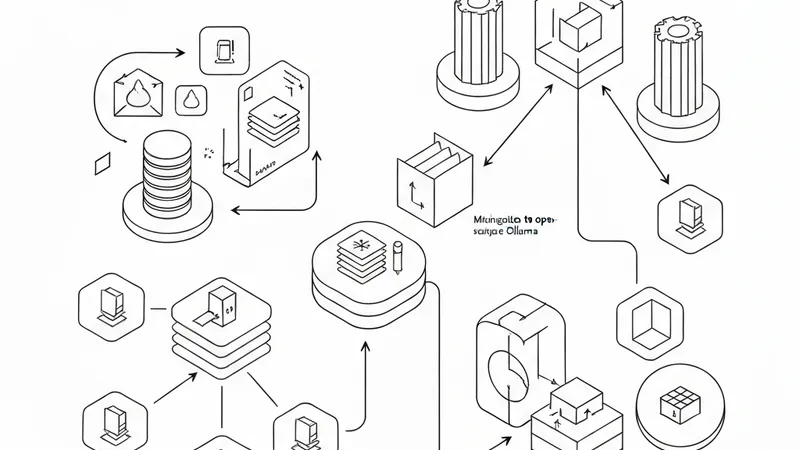
To establish a fully local "AI Developer" workflow, three core components are required: a powerful local model, a lightweight runtime runner, and a seamlessly integrated IDE extension. For the runner, Ollama has become the gold standard due to its out-of-the-box simplicity, allowing developers to host multi-billion parameter models with a single command. On the editor side, Continue.dev, an open-source IDE plugin, provides the perfect bridge—supporting both VS Code and JetBrains, and replicating the inline tab-completion and chat sidebar experience of GitHub Copilot.
In real-world testing, Qwen2.5-Coder-32B demonstrates astonishing capabilities. Running on Apple M3 Max or an RTX 4090 with 24GB of VRAM, the model generates high-quality code with minimal latency. Whether performing complex asynchronous refactoring in Python or creating modern React components, its accuracy is remarkably close to GPT-4o. Crucially, local setups bypass internet latency, rate limits, and provide zero-cost token consumption.
However, the local-first approach does present challenges, primarily around hardware requirements. To achieve a fluid experience, developers need at least 16GB of unified memory (on Mac) or a high-end discrete GPU. Additionally, for massive, multi-file codebases requiring global logical reasoning, local models still slightly trail top-tier cloud APIs. Nonetheless, for 90% of daily tasks including coding, debugging, and test generation, local AI is fully capable.
[AgentUpdate Depth Analysis] This shift from "cloud subscription" to "local sovereignty" in software engineering marks a pivotal moment for the decentralization of the AI Agent ecosystem. High API costs and strict privacy guidelines have historically prevented enterprise-grade deployments of autonomous coding Agents on proprietary codebases. The convergence of highly capable local models (like Qwen2.5-Coder) with the MCP (Model Context Protocol) empowers local Agents with unprecedented, secure access to local file systems and terminal execution. Moving forward, AI coding Agents will evolve from passive code generators into secure, autonomous "full-stack digital employees" operating entirely within the user's local boundaries. This democratization of edge intelligence will radically reduce the marginal cost of software creation, accelerating the transition towards truly autonomous agentic workflows.