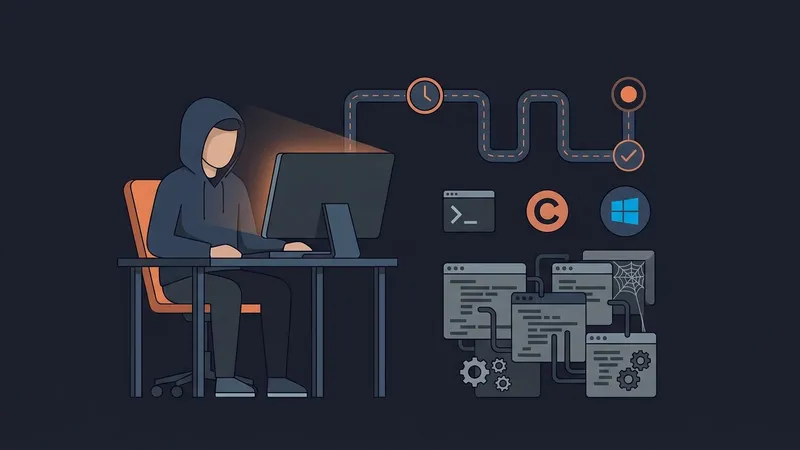
OpenAI has begun rolling out Lockdown Mode, an optional security setting designed to offer advanced protection from prompt injection attacks. As AI systems have become increasingly adept at pulling real-time information from the web, malicious actors have begun hiding instructions on webpages to trick and hijack conversational chatbots.
OpenAI bills Lockdown Mode as a last line of defense, building on its existing backend safeguards. "Lockdown Mode is not intended for everyone," OpenAI explains. "It is designed for people and organizations that handle sensitive data and want stricter protection from data exfiltration risks related to prompt injection."
Enabling Lockdown Mode deliberately limits several interactive features. While users can still generate images and upload photos, ChatGPT will no longer pull images from the internet or render web images in its responses. The chatbot is also blocked from downloading external files for analysis, though manual document uploads remain fully functional. Crucially, advanced autonomous capabilities such as Deep Research and Agent Mode are completely disabled under this high-security setting. OpenAI notes that other preferences—such as memory, file uploads, conversation sharing, and model training opt-outs—remain unchanged and separately configurable by workspace administrators.
The company also emphasizes that Lockdown Mode does not stop malicious prompts from appearing in content. Instead, it is designed to neutralize data extraction by strictly limiting outbound network requests that bad actors could exploit. Lockdown Mode is now available to all personal accounts, including the free tier, and can be toggled on under "Safety and security" within ChatGPT's settings. Concurrently, OpenAI is launching an active session manager to help users track and revoke access from authorized devices.
[AgentUpdate Depth Analysis] As AI Agents increasingly transition from simple text-generators to autonomous systems with active tool-use, prompt injection has evolved from a novelty to a systemic security vulnerability. OpenAI's decision to completely disable "Agent Mode" under Lockdown Mode highlights a critical compromise in the current LLM paradigm: the trade-off between capabilities and safety. Compared to Anthropic's sandboxed approach with MCP (Model Context Protocol), OpenAI’s "Lockdown Mode" opts for functional isolation. This signals that robust agent autonomy remains too risky for high-security enterprise environments without air-gapped runtimes. For the AI Agent ecosystem to truly mature and achieve widespread enterprise adoption, the industry must move beyond simple network disabling toward zero-trust, verifiable agent execution environments that protect sensitive data without paralyzing the Agent's core utility.