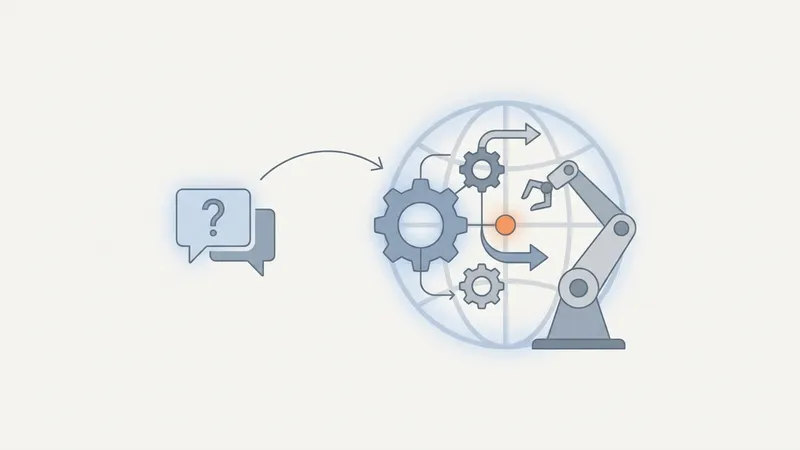
"Chat is dead," a senior OpenAI employee recently told the Financial Times. The prominent AI firm is pivoting from simple question-and-answer chatbots toward autonomous AI agents that can execute complex tasks independently. This pivotal shift is fueling the largest redesign of ChatGPT since its landmark debut in 2022, transforming the interface into an "all-in-one superapp" that integrates advanced coding tools, agents, and partner ecosystems like Canva and Booking.com.
Chief Product Officer Thibault Sottiaux explained to the FT: "It will transcend the actual surface... what we're building towards is where you have your own personal agent that is capable of helping you... across everything in your life, be it personally or at work." Based on insights from over a dozen current and former employees, OpenAI has indeed confirmed its strategic direction towards building this cohesive superapp.
In the upcoming weeks, users will see a refreshed ChatGPT web and mobile interface. The new design will actively nudge users toward coding utilities, image creation, and partner applications. Over time, these manual nudges are expected to disappear as underlying models intuitively predict user intent. Under Sottiaux's direction, OpenAI has already consolidated its ChatGPT, Codex, and other core product teams to streamline this transition.
[AgentUpdate Depth Analysis] The declaration that "chat is dead" marks a critical paradigm shift from LLMs as conversational interfaces to LLMs as action-oriented execution engines. By transforming ChatGPT into a unified agentic superapp, OpenAI is attempting to establish the dominant operating system for the AI era. While developer frameworks like LangChain or CrewAI focus on bottom-up orchestration, OpenAI leverages its massive consumer footprint to enforce a top-down platform play, wrapping external services directly into autonomous workflows. This strategic move threatens traditional SaaS and app-store distribution channels. Ultimately, the future of the AI Agent ecosystem will hinge not on simple API integrations, but on a model's native capability for long-horizon planning and tool usage, accelerating an industry-wide shift toward "Agent-First" software architectures.