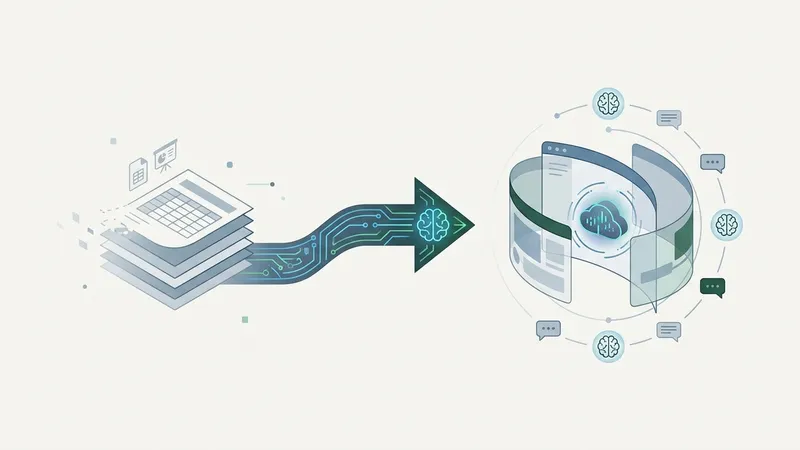
In traditional office workflows, knowledge workers spend their days sending static files: decks, memos, spreadsheets, reports, proposals, and training materials. However, AI is rapidly making it possible to build richer, living versions of these documents. This shift has become even more accessible with the release of interactive features such as OpenAI's Sites capabilities, allowing users to effortlessly generate dynamic, shareable, and updateable web links instead of static attachments.
On this episode, NLW walks through over 10 practical examples of everyday work outputs that are far better suited as interactive web applications than cold PDFs or Excel sheets. For instance, instead of sending a rigid financial spreadsheet, workers can generate an interactive dashboard with dynamic sliders for scenario analysis. A lengthy training document can be transformed into an active learning portal equipped with an integrated Q&A bot, while a standard proposal can be presented as a live, clickable prototype that clients can directly experience.
The power of this transition lies in real-time interactivity and seamless updates. Powered by Anthropic's Artifacts and OpenAI's code-generation pipelines, these interactive links allow recipients to manipulate data, tweak parameters, and trigger code executions on the fly. This high-density information exchange drastically reduces the friction of modern collaboration and accelerates business decision-making cycles.
[AgentUpdate Depth Analysis] This paradigm shift from static deliverables to active micro-applications represents the practical dawn of Generative UI (Generative User Interface). While Anthropic’s Artifacts focus on real-time rendering within a seamless code sandbox, OpenAI’s evolving Sites and Canvas ecosystems aim at turning raw model outputs into publishable, production-ready web assets. For the AI Agent ecosystem, this is a monumental evolutionary step. Agents are transitioning from mere text-based conversationalists into full-stack software engineers capable of spinning up customized runtime environments on demand. In the long run, this dynamic UI generation will dismantle the rigid structures of traditional SaaS, enabling multi-agent systems to cooperatively build, modify, and utilize their own tailored interfaces, paving the way for a truly adaptive human-AI collaborative environment.