Over the past two years, NVIDIA's content safety stack has evolved from a single English text classifier into a family of specialized models, with each expanding to support new modalities, languages, and inference modes. Following the release of Nemotron 3 Content Safety in March 2026—which first combined multimodal and multilingual capabilities in a single 4B-parameter model—NVIDIA has today launched Nemotron 3.5 Content Safety. This new release completes the suite's evolution by unifying multimodal evaluation, global language coverage, customizable enterprise policy enforcement, and auditable reasoning within a single inference call.
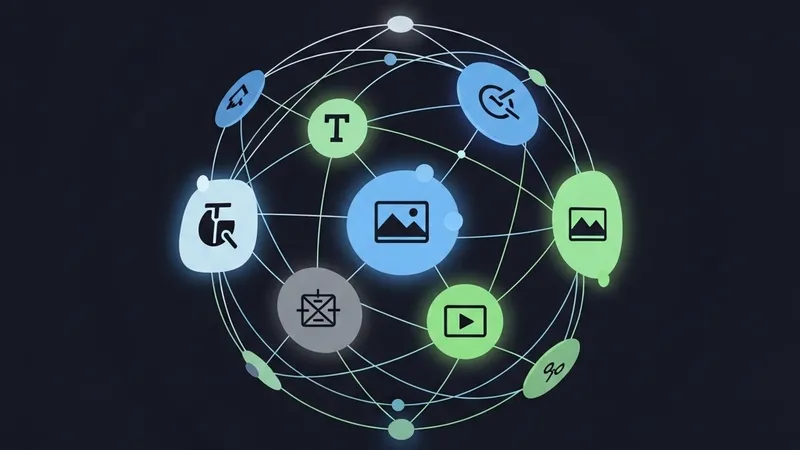
The first major advancement is Unified Multimodal Evaluation. While Nemotron 3 introduced image understanding, Nemotron 3.5 achieves a much deeper multimodal integration. The model handles a user prompt, an optional image, and an optional assistant response within a single context window to produce a coherent safety verdict. Evaluating these inputs together closes a well-known vulnerability in multimodal safety where policy violations only surface through the interplay between text and imagery, or between prompt and response.
In terms of Global Language Coverage, Nemotron 3.5 maintains explicit training for 12 core languages—including English, Chinese, French, Spanish, German, Japanese, Korean, Arabic, Hindi, Russian, Portuguese, and Italian. Crucially, it inherits strong zero-shot generalization across approximately 140 languages from the Gemma 3 base model. This allows global enterprises deploying in markets with scarce training data to leverage multilingual transfer without the need for bespoke fine-tuning.
The most significant architectural addition is Custom Policy Enforcement. Production AI applications rarely align with a single safety taxonomy; a medical platform has vastly different risk tolerances than a coding assistant or a children's game. Nemotron 3.5 accepts custom policy specifications alongside user inputs, dynamically reasoning over these active policies during inference rather than relying on a hardcoded, default taxonomy. This successfully extends the work of Nemotron Content Safety Reasoning 4B to full multimodal and multilingual applications.
Finally, the addition of Reasoning Traces (leveraging the THINK mode) provides developer and compliance teams with a transparent, step-by-step reasoning path behind safety verdicts. This turns what was once a "black-box" decision into an auditable process, greatly easing debugging and compliance pipelines.
[AgentUpdate Depth Analysis] As AI Agents transition from simple text chatbots to autonomous, multimodal orchestrators, traditional static and retrofitted guardrails are proving insufficient. NVIDIA's Nemotron 3.5 Content Safety represents a significant paradigm shift toward runtime-dynamic, context-aware safety systems. By integrating custom policy enforcement and chain-of-thought (THINK mode) reasoning into a single 4B-parameter model, it enables AI Agents to adapt their safety criteria dynamically based on the specific tools they execute or the industry regulations they must comply with. The ability to verify safety across multimodal inputs in a single forward pass reduces systemic latency while neutralizing complex prompt injection and jailbreak vectors. This capability is pivotal for the developer ecosystem, shifting AI safety from a restrictive afterthought to a programmatic, explainable, and scalable foundation for enterprise-grade Agent workflows.