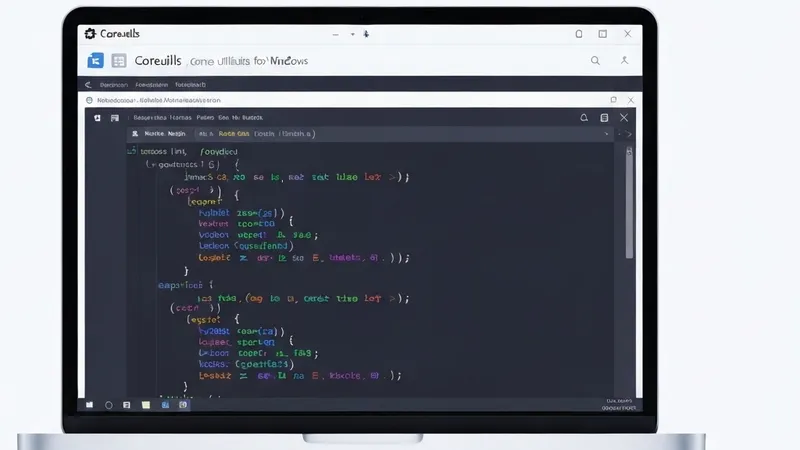
At the recent Build 2026 developer conference, Microsoft officially announced the launch of Coreutils for Windows. Rather than a hard fork, this project is maintained as a downstream version of the popular Rust Coreutils (uutils), ensuring continuous alignment with the upstream open-source community while being tightly integrated into Microsoft's developer ecosystem across Windows, WSL, macOS, and Linux.
As a modernized suite of system utilities, Coreutils for Windows includes not only the fundamental uutils/coreutils but also essential tools like findutils and grep. Its primary goal is to eliminate environment friction in cross-platform development. Historically, the syntactic differences in commands, flags, and pipelines between Windows and Unix-like systems forced developers to maintain separate scripts. With this project, standard shell scripts can run seamlessly across all major platforms without any modification.
Notably, Microsoft’s decision to back a Rust-based implementation underscores its strategic shift toward Memory Safety and high performance in core system toolchains. Coupled with Microsoft’s ongoing commitment to WSL, this move marks a significant step in turning Windows into a highly compatible, developer-centric hybrid environment.
[AgentUpdate Depth Analysis] Microsoft's initiative does more than just benefit human developers—it lays down a vital infrastructure foundation for the AI Agent ecosystem, particularly for Computer Use and OS-world automation agents. A major bottleneck for advanced agents, like Claude 3.5 Sonnet's computer-use capabilities, has been the fragmentation of OS shell environments. Agents frequently fail when executing low-level tasks due to subtle differences between PowerShell and Bash. By establishing a standardized, high-performance, and memory-safe implementation of core utilities via Rust uutils, AI Agents can now leverage a unified set of tool calls across both Windows and Linux without redundant adaptation layers. This drastically lowers the complexity of cross-platform agentic workflows and accelerates the deployment of reliable, enterprise-grade system-level AI Agents.