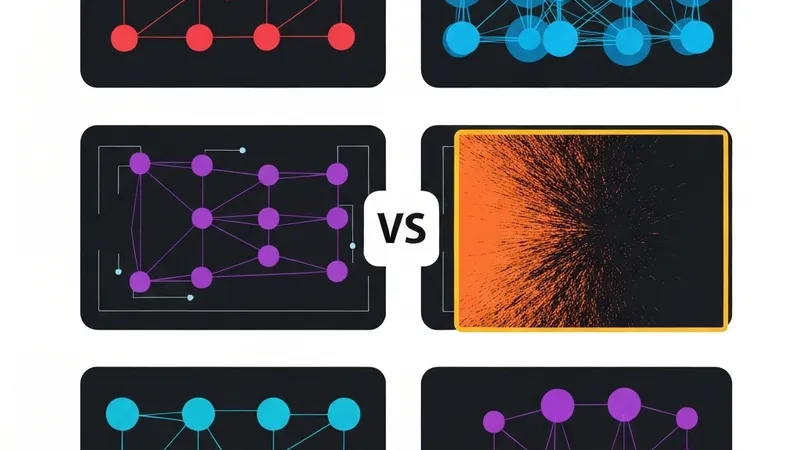
In machine learning, practitioners often encounter a frustrating phenomenon: multiple models achieve nearly identical predictive performance on a task, yet deliver highly divergent feature-based explanations. This is known as the Rashomon effect in explainable machine learning (XAI), raising a fundamental question: if explanations conflict, which ones can we actually trust?
To address this critical challenge, researchers have proposed a novel framework based on metamorphic testing, accepted at the MET 2026 workshop. This approach evaluates the 'explanation faithfulness' of post-hoc attribution methods without requiring ground-truth labels. It bypasses a major bottleneck in XAI evaluation by focusing on the consistency of the explanation under systemic input mutations.
The core of the framework lies in five metamorphic relations that formalize the expected consistency properties between model behavior and feature attributions. Applied to tabular datasets using popular explainers like SHAP and LIME, the framework proves to be a powerful, model-agnostic tool for identifying models that are not only accurate but also offer reliable and trustworthy explanations.
[AgentUpdate Depth Analysis] As AI Agents transition from simple wrapper pipelines to autonomous, multi-agent frameworks operating in critical domains, the 'black-box' nature of their reasoning presents a major deployment risk. Traditional XAI methods often fail to explain agent decisions reliably due to the Rashomon effect. This metamorphic testing framework introduces a robust QA methodology tailored for complex cognitive architectures. By defining metamorphic relations between agent inputs, memory states, and tool-calling decisions, developers can systematically audit whether an agent's rationalization is faithful or merely a post-hoc hallucination. In the long run, integrating metamorphic validation into AI Agent lifecycles will be essential for creating self-correcting, auditable, and compliant agentic workflows in high-stakes industries like finance and healthcare.