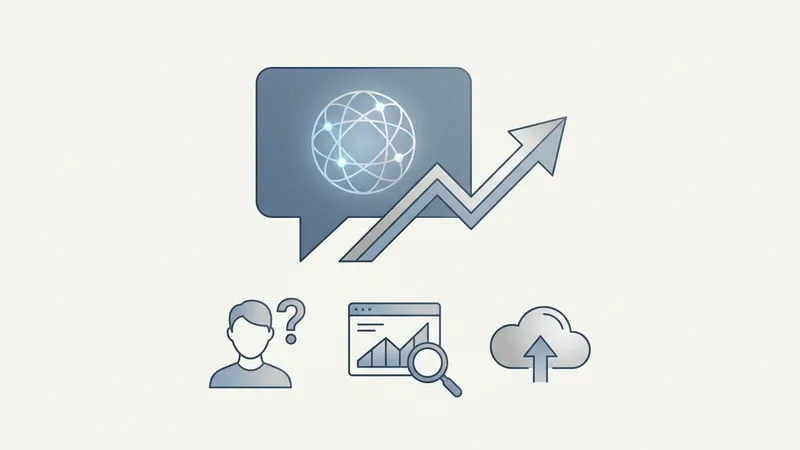
On Thursday, Meta announced the introduction of a new AI creator assistant on Facebook. This dedicated assistant is designed to provide personalized recommendations to creators based on their unique content style, performance metrics, community engagement, and growth goals.
Instead of manually parsing through complex charts and creator dashboards, creators can now converse with the AI assistant to get quick answers to queries like "When should I post?" or "What are people saying in my comments?" Because the tool is fully conversational, users can ask follow-up questions to gain deeper insights, such as tracing how their audience demographics have shifted over time.
Beyond data analytics, the assistant acts as a creative partner by drawing on trending topics to suggest new content ideas, such as using popular audio tracks or leveraging current cultural moments. The assistant is currently rolling out to creators in the U.S., Canada, and India, with plans for broader global expansion and additional capabilities in the near future.
By providing direct in-app access to an AI assistant, Meta aims to boost creator retention on Facebook amidst stiff competition from rivals like TikTok and YouTube. Native access eliminates the friction of turning to third-party tools like ChatGPT, effectively locking creators within Meta's proprietary ecosystem.
Alongside the assistant, Meta expanded its AI translation features on Facebook to support languages such as French, Arabic, Indonesian, Thai, and Vietnamese. This system preserves the creator's original voice tone and offers a lip-syncing feature to make the translated audio appear natural. Meta reported that over 500 million users now watch AI-translated videos on Facebook weekly.
[AgentUpdate Depth Analysis] Meta's new AI creator assistant represents a significant shift from generic LLM wrappers to specialized, context-aware vertical Agents. By integrating "Analytics Agents" and "Creative Agents" directly into the social platform, Meta bypasses the need for complex API data pipeline exports (like LangChain or custom workflows) into third-party interfaces. This "endpoint Agent" deployment strategy establishes a powerful moat secured by proprietary, real-time user data loops. The long-term implication for the AI Agent ecosystem is clear: generic chat assistants will lose ground to deeply integrated, application-native agents. For developers, this demonstrates that the most viable and sticky Agent architectures are those embedded directly where user attention and primary data generation already coexist.