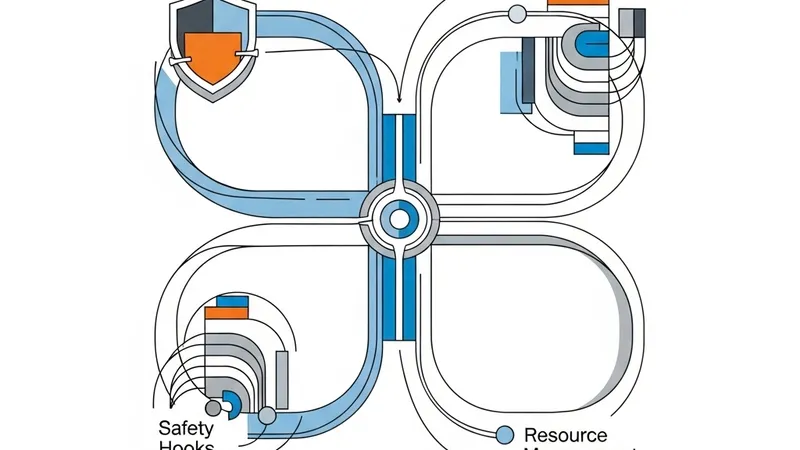
As Claude Code gains traction in development automation, mastering sub-agent loops has become essential for system reliability. By integrating safety hooks, developers can conduct real-time audits of recursive calls, effectively preventing agents from entering infinite loops or executing unauthorized code blocks.
Regarding resource management, Claude Code implements fine-grained control over sub-task execution through strict context window management and cost monitoring. This architecture not only optimizes token consumption but also significantly reduces hallucination risks during complex task decomposition. Through this layered control strategy, Anthropic demonstrates how to maintain system-level consistency and security in large-scale collaborative environments.
[AgentUpdate Depth Analysis] The introduction of sub-agent loops in #Claude Code signifies a pivotal shift in the AI Agent ecosystem, moving from simple trigger-action models to structured autonomous orchestration. Compared to existing frameworks like LangGraph or CrewAI, Claude Code leverages its deep integration with the IDE environment to offer a more deterministic execution path. This mechanism mirrors interrupt and scheduling logic found in traditional operating systems, providing necessary rigid constraints for #LLM multi-step reasoning. Amidst current industry challenges regarding 'reasoning overflow' in complex agents, these innovative safety hooks serve as fundamental infrastructure rather than mere rate-limiting tools. Looking ahead, as collaborative protocols between sub-agents become standardized, this architecture—defined by recursive constraints and strict resource budgeting—will likely become the industry standard for industrial-grade agents. Developers should focus on abstracting these logic patterns into reusable middleware that remains compatible with the broader MCP ecosystem to accelerate the evolution toward highly reliable autonomous systems.