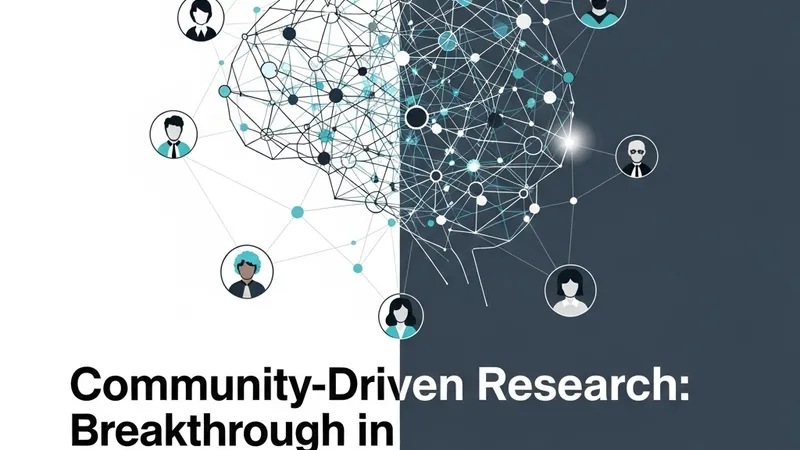
Recent community research has introduced a highly promising approach to one of the most persistent hurdles in machine learning: catastrophic forgetting. By implementing an innovative "Linked-LoRA memory stack" on Meta's lightweight Llama 3.2 models, researchers have demonstrated a resource-efficient pathway for achieving stable continuous learning.
The core innovation lies in the architectural solution of the Linked-LoRA stack. This method provides a novel way of managing model memory, allowing previously learned information to be preserved while the model undergoes training for new tasks. This effectively prevents the degradation of existing knowledge bases, which is a common issue in standard fine-tuning processes where new data often overwrites prior weights.
The technique was specifically tested on the 1-billion (1B) and 3-billion (3B) parameter versions of Llama 3.2. These models are designed for edge-scale efficiency, and the successful application of Linked-LoRA proves that sophisticated machine learning capabilities can be maintained on consumer-grade hardware. It empowers developers to build AI systems that are both highly adaptable and capable of retaining long-term memory without requiring massive cloud infrastructure.
Ultimately, this breakthrough in memory management offers exciting possibilities for the future of AI. By overcoming the barrier of knowledge loss, Linked-LoRA paves the way for more robust, continuously evolving AI agents that can operate efficiently on local devices. This research marks a significant step toward making lifelong learning a practical reality for small-scale language models.