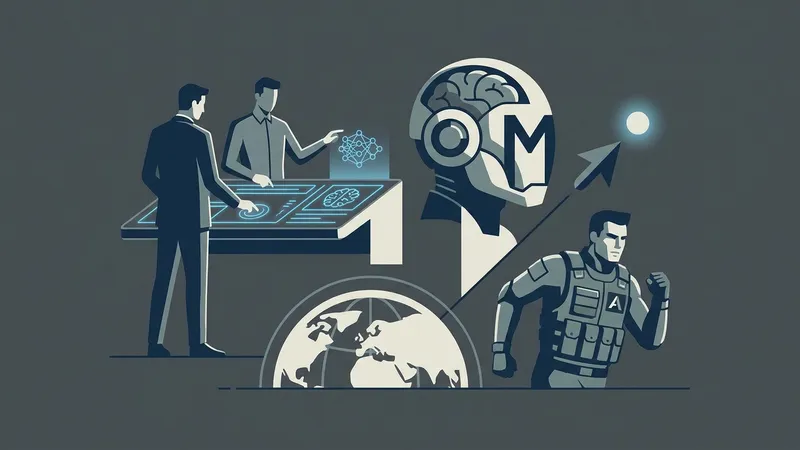
A year after Mark Zuckerberg installed Alexandr Wang to jolt Meta’s artificial intelligence efforts into wartime mode, the $1.5 trillion company has produced Muse Spark, its most credible AI model yet.
By handing responsibility for Meta’s AI revival to a then-28-year-old start-up founder rather than a veteran researcher, Zuckerberg bet that an outsider’s urgency and ambition could succeed where the company’s established AI organization had struggled.
According to interviews with current and former Meta employees, and associates of Wang, the billionaire wunderkind has now begun to eke out results, while navigating criticism over his experience, early research challenges, and the esoteric internal politics of working at a Big Tech behemoth.
In nearly 12 months, Wang has assembled an elite research group on multimillion-dollar salaries, reshaped parts of Meta’s AI operation, and emerged as one of the most influential executives inside the company—the only Meta leader alongside Zuckerberg to attend a White House dinner with top Silicon Valley figures last year hosted by President Donald Trump.
In April, Meta also released Muse Spark, the first major model to emerge from Wang’s secretive research group, known as TBD Lab (now Meta Superintelligence Labs).
Wang’s proponents view the release of the model as the clearest sign yet that Meta’s AI rebuilding effort is gaining traction and are confident that successor models—expected to launch in the coming months—could further close the gap with OpenAI, Google, and Anthropic.
“The amount of work the TBD Lab was able to do in a short amount of time is very impressive,” said Russ Salakhutdinov, a computer science professor at Carnegie Mellon University and Meta’s former vice president of AI research. “Alex knows what he doesn’t know and he’s willing to listen.”
Others inside Meta are far less convinced. Critics describe Wang’s leadership as frenetic, arguing he has overplayed what is more incremental progress. Some current and former employees are skeptical that Meta can gain a leading position in frontier AI under Wang.
“The TBD folks, Alex and Zuck too, set a pretty low bar for Muse Spark internally and externally,” said one former Meta AI employee. “The other labs are moving fast.”
Meta said: “Alex’s record speaks for itself: In less than a year, he’s helped build one of the strongest research teams in the industry and led Meta Superintelligence Labs as it launched Muse Spark and established the scientific and technical foundation.”
[AgentUpdate Depth Analysis] Meta's transition to a "wartime mode" under Alexandr Wang's leadership highlights the critical pivot tech giants must make to survive in the AI Agent era. Muse Spark represents more than just another LLM iteration; it is Meta's high-stakes gamble to lay the groundwork for proactive, agentic workflows that compete directly with OpenAI’s GPT-4o and Anthropic’s Computer Use capabilities. By consolidating talent under the newly minted Meta Superintelligence Labs, Meta aims to bypass academic-style delays in favor of rapid, execution-led deployment. For the broader AI Agent ecosystem, Muse Spark’s trajectory will determine whether Meta can transition its dominant open-source influence (forged by LLaMA) into a highly cohesive, agentic ecosystem. If successful, this wartime strategy could democratize advanced agent infrastructures; if not, it risks relegating Meta to an incremental follower in the race for true autonomous agents.