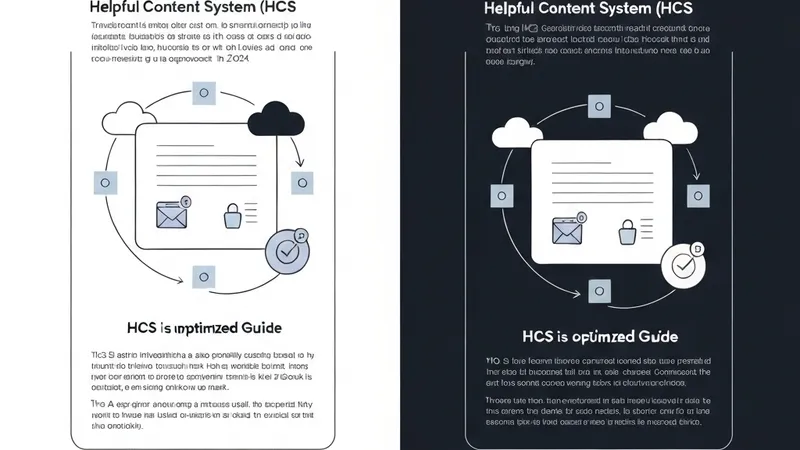
Google's Helpful Content System (HCS) has evolved into a cornerstone of its core ranking infrastructure. Originally launched in August 2022 as a standalone update, HCS was integrated into Google's core ranking systems in March 2024. It now operates as a continuous, automated process rather than a periodic update, driving ranking outcomes across all core updates.
The HCS framework is designed to distinguish between "people-first" content—which is helpful, original, and satisfies searcher intent—and content created primarily for search engines, which is often manipulative, derivative, and designed for ranking rather than utility. This documentation serves a dual purpose as both an installation manual and an audit document for web and AI engineering teams.
Implementation of the HCS framework follows three distinct operating modes: Install Mode for building compliant infrastructure, Audit Mode for evaluating legacy content, and Hybrid Mode for targeted remediation. While the reference samples are in plain HTML, the logic is applicable across the modern web stack, including React, Next.js, Astro, and Remix, with specific guidance for managing Tailwind-related concerns like cumulative layout shift (CLS) and accessibility.
The framework also integrates with modern developer tools like Claude Code CLI. By consuming this document, CLI tools can collect client variables, run self-assessments on content, and identify SEO-first patterns that signal manipulation. A critical component of HCS compliance is the conflict resolution rule: existing thin content optimized solely for search must be flagged for deep enrichment or consolidation. Manipulative patterns such as keyword stuffing or doorway pages must be removed, as they act as a negative signal that drags down the entire site's ranking potential.