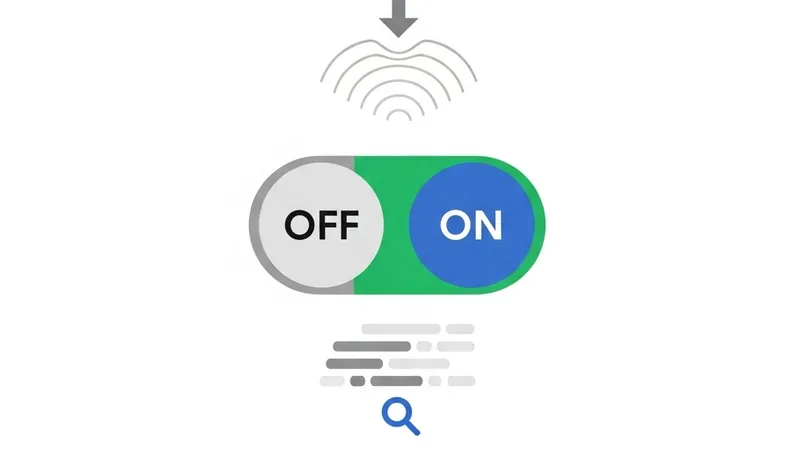
The U.K. has imposed legal guardrails on Google’s AI search expansion. Google announced compliance with the U.K.’s regulatory requirements, stating it must offer publishers a way to opt out of being aggregated into AI search.
To opt out, publishers will be able to use a new toggle in Google’s Search Console, a free service that allows website owners to manage their web presence in Google’s search results.
Once opted out, the publisher’s site will not be shown in Google’s generative AI Search features, like AI Overviews, AI Mode, or AI Overviews in Discover. Google noted in the announcement that its AI Overviews now have over 2.5 billion monthly active users, and its AI Mode has surpassed one billion monthly users.
The tech giant says it will initially test the opt-out option with a subset of U.K. publishers before rolling it out globally.
The U.K.’s Competition and Markets Authority (CMA) calls the move to put publishers back in control of how their content is used a "world first." It points out that it will put publishers, including news organizations, into a stronger position to negotiate content deals with Google for use of their content in AI features.
The CMA designated Google as having "strategic market status" last October, laying the groundwork for future regulations. In January, it pushed Google to give website publishers a choice as to whether their content is aggregated into AI search features or used to train stand-alone AI models.
Alongside the opt-out toggle, Google is required to make sure publisher content in AI features is properly attributed using clear links. Google suggested compliance, noting it recently increased the number of inline links directly within its AI responses and added website previews to encourage click-throughs.
Google notes that a website’s decision to opt out of generative AI search features will not be used as a ranking signal for traditional Google search.
However, the company will present new metrics in its Search Console to sway publishers considering opting out, including impression metrics and information about which of their pages appear in AI responses. More metrics will be added over time.
[AgentUpdate Depth Analysis] The CMA's regulatory action marks a pivotal shift in the content economics of the LLM and AI Agent era. As web traffic increasingly shifts from traditional search queries to structured outputs generated by AI Agents and RAG systems, the tacit "free content for traffic" contract of the open web is breaking down. By forcing Google to implement an opt-out toggle and enforce clear content attribution, regulators are establishing a critical precedent: data control must return to creators. This not only gives publishers essential leverage in content-licensing negotiations with tech giants but also sends a warning to AI Agent builders. The era of zero-cost scraping to build proprietary knowledge bases is ending. Moving forward, standardized, consent-based integration frameworks like the Model Context Protocol (MCP) will become vital infrastructure for agents to access real-time, high-quality information legally and sustainably.