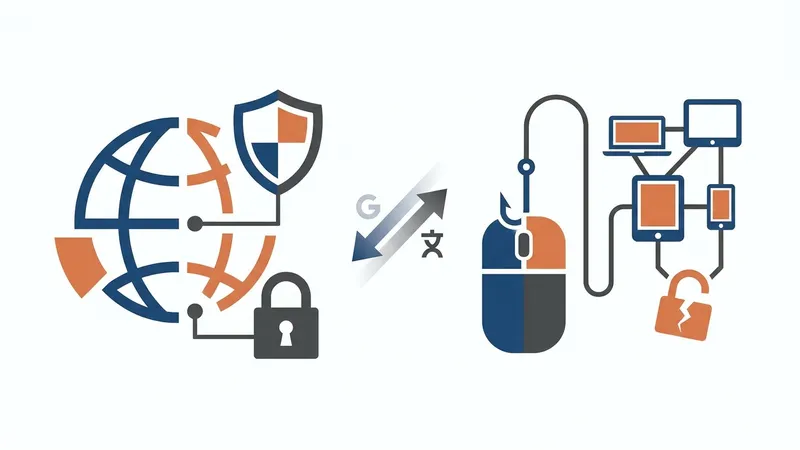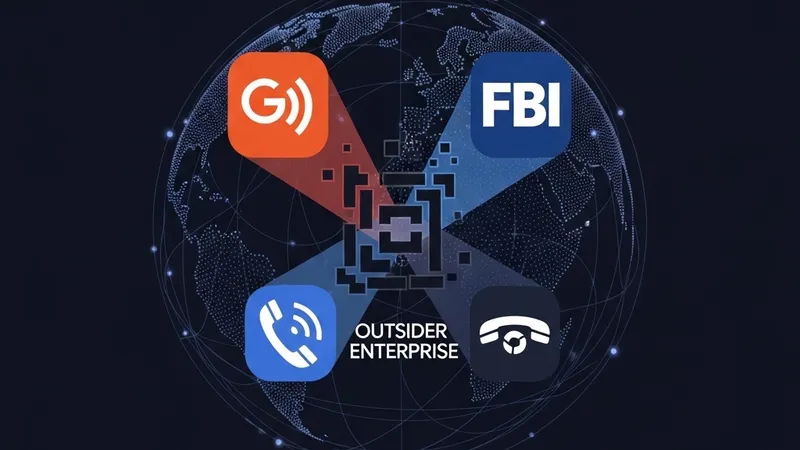
Google has filed a lawsuit against a Chinese cybercrime syndicate known as "Outsider Enterprise" for utilizing its Gemini AI to orchestrate a "massive" scam operation. To dismantle the campaign, the tech giant coordinated with the FBI alongside major carriers AT&T, T-Mobile, and Verizon. #Google's General Counsel, DeLaine Prado, emphasized the unprecedented nature of this joint legal action, indicating the massive scale of the group's fraudulent activities.
According to the lawsuit, the Chinese organization leveraged Google's technology and branding to commit fraud. Google is seeking a restraining order to shut down the network. The hackers allegedly used #Gemini to dynamically generate lookalike websites of Google, YouTube, the US Postal Service (USPS), and New York's E-ZPass toll service. Google did not disclose specific internal technical countermeasures taken within the Gemini system to mitigate this abuse.
The scam has targeted hundreds of thousands of victims, with estimated financial losses in the millions. Over a mere two-week span, the group established 9,000 fake websites and 1 million fraudulent URLs. They also blasted 55,000 spam texts flagged by Android users, as well as 2.5 million messages embedding phishing links, showcasing how AI can supercharge criminal scalability.
In response, Google is actively advocating for seven bipartisan bills, including the "National Strategy for Combatting Scams Act" and the "AI Plan Act," to curb AI-driven fraud. Congressman Brian Fitzpatrick characterized the operation as a highly organized transnational crime rather than mere spam. FBI Assistant Director Brett Leatherman added that criminals are increasingly exploiting AI to render fraud far more convincing and difficult to detect, necessitating coordinated law enforcement and legislative action.
[AgentUpdate Depth Analysis] Google's landmark lawsuit underscores a critical inflection point: the weaponization of generative models and automated Agentic workflows by cybercriminals. Unlike traditional static phishing, the integration of Gemini AI allowed this syndicate to execute hyper-personalized, massive-scale scams in near real-time. This incident highlights a major vulnerability in the burgeoning AI Agent ecosystem. As agents become more autonomous, preventing "malicious agentic orchestration" becomes paramount. The industry must shift from purely optimizing model capability to hardcoding robust safety guardrails and multi-layered verification protocols. The future viability of the AI Agent market will heavily rely on trust infrastructure, requiring platforms to co-develop defense mechanisms alongside public authorities to counter adaptive AI-driven threats.