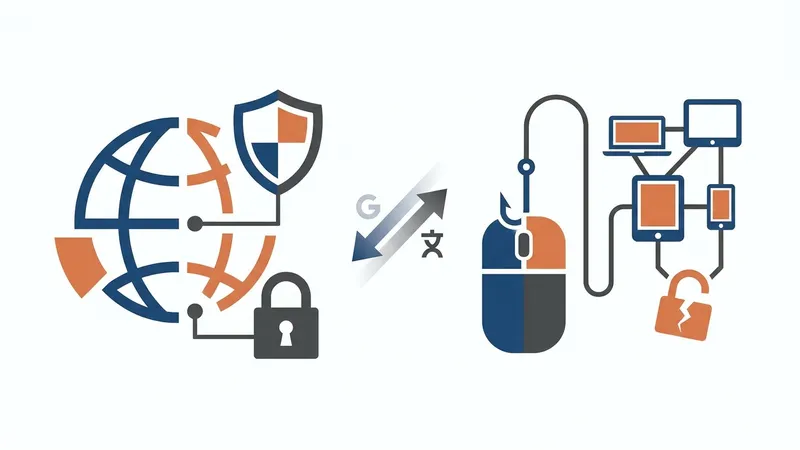
While Google frequently highlights the benevolent uses of its generative AI products, the technology is also increasingly weaponized for cybercrime. Google has filed a lawsuit targeting a Chinese group named "Outsider Enterprise," which is allegedly running a massive AI-driven scam campaign. Google is now collaborating with law enforcement and mobile carriers to fight back.
According to the legal filing, Outsider Enterprise operates primarily through Telegram, offering #phishing-as-a-service to technically unsophisticated individuals. The group provides step-by-step guides on leveraging Gemini AI to generate highly convincing clone websites mimicking Google, YouTube, and government entities like New York's E-ZPass. The network offered nearly 300 scam templates for quick deployment.
Google's telemetry reveals that the group's campaign triggered the dispatch of over 2.5 million scam text messages to Android users, with 55,000 sent during a mere two-week window last month. In total, Google has tracked over 9,000 fraudulent websites and 1 million URLs mapped back to this illicit infrastructure.
The SMS lures typically spoofed urgent account security alerts or package delivery issues. Clicking the link directed users to legitimate-looking sites constructed with Gemini's assistance. These sites harvested sensitive credentials and banking details. Although Google's filing didn't detail exact financial damages, its blog post confirmed hundreds of victims suffered monetary losses.
To mitigate the campaign, Google partnered with AT&T , Verizon , and T-Mobile to block the malicious texts. Google noted that its on-device, AI-powered scam detection inside Google Messages played a pivotal role, which globally blocks over 10 billion spam texts monthly, mitigating a significant portion of this threat.
[AgentUpdate Depth Analysis] This incident underscores a worrying inflection point: the democratization of malicious workflows via Generative AI, effectively lowering the barrier to entry for cybercrime. By weaponizing tools like Gemini, bad actors have built automated pipelines that mirror legitimate multi-agent orchestration frameworks like CrewAI or LangChain. This "Phishing-as-a-Service" model demonstrates how LLMs can automate localization, frontend generation, and social engineering at scale. For the AI Agent ecosystem, this highlights the critical need for proactive, contextual security protocols. Defensive architectures must evolve from static pattern matching to active, agentic monitoring at both the device and API gateway level. Model providers must enforce more robust, intent-aware guardrails, particularly when exposing APIs to external agents and custom applications.