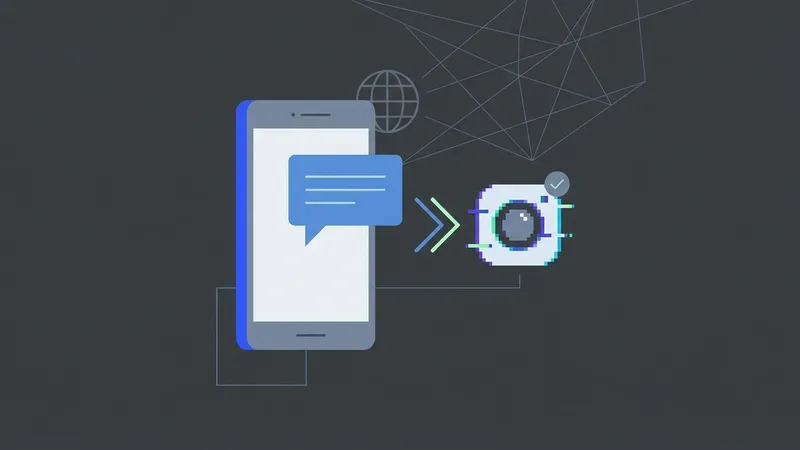
According to recent code dives, Google Messages is actively working on a new feature designed to automatically detect AI-generated images shared within chats. Discovered in the strings of a recent beta update, this upcoming capability aims to flag synthetic media directly within the messaging interface.
On a technical level, the detection is expected to leverage #Google's proprietary SynthID technology, developed by Google DeepMind. #SynthID embeds imperceptible digital watermarks directly into the pixels of AI-generated images. Additionally, Google is likely to support open industry standards like C2PA (Coalition for Content Provenance and Authenticity) metadata, allowing the app to identify synthetic images generated by third-party platforms.
With the rapid rise of hyper-realistic image generators like Midjourney and DALL-E 3, synthetic media has increasingly been weaponized for social engineering scams and spreading misinformation. By integrating detection directly into the OS-level messaging client, Google is building a crucial line of defense. Users will likely see warning banners or labels next to AI-generated images, fostering a more secure and transparent digital communication environment.
[AgentUpdate Depth Analysis] Google's integration of AI image detection directly into its default messaging app marks a pivotal shift where content verification becomes a native OS-level utility. Competing ecosystems, such as Apple's, are also moving toward #C2PA metadata support. For the broader AI Agent ecosystem, this highlights a critical transition from passive content consumption to active, multi-modal trust verification. As autonomous AI Agents increasingly interact with real-world users and other agents via text and image channels, they will face unprecedented threats like visual prompt injection and synthetic identity fraud. Native, low-latency detection frameworks will serve as the essential security guardrails for next-generation agents. To sustain reliable agent-to-agent and agent-to-human workflows, the industry must align on standard trust protocols, transforming AI safety from a centralized cloud filter into an ambient, edge-computed immune system.