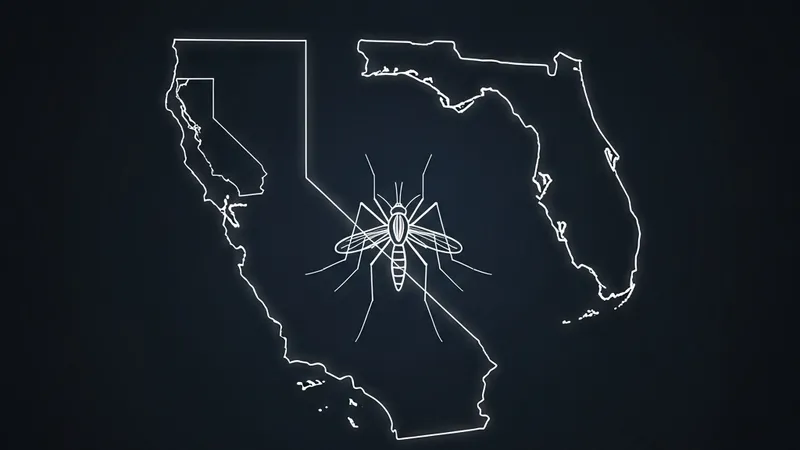
Debug, an initiative under Google's life sciences sibling Verily, is seeking regulatory approval to release 32 million sterile male mosquitoes across California and Florida. The ambitious program aims to suppress vector-borne disease transmission by deploying advanced biological control techniques at scale.
The released male mosquitoes are infected with Wolbachia bacteria, inducing cytoplasmic incompatibility. Consequently, when these sterile males mate with wild females, the resulting eggs fail to hatch, leading to a generational collapse of the local mosquito population. Crucially, male mosquitoes do not bite humans, ensuring that the mass release does not pose an immediate nuisance or health hazard to local communities.
The initiative is currently awaiting a decision from the U.S. Environmental Protection Agency (EPA), with the public comment period having concluded on June 5. Despite the scientific consensus, the project has faced notable public skepticism, with some residents raising conspiracy theories, reflecting the persistent socio-technological barriers that groundbreaking bio-tech innovations must overcome during deployment.
[AgentUpdate Depth Analysis] The Debug initiative represents a pioneering frontier where biological engineering converges with physical-world Autonomous Agents. While digital AI Agents dominate software, physical-biological hybrid agents are redefining ecological management. Google’s Debug relies on AI-driven sorting algorithms, precision release robotics, and spatial population modeling. Compared to traditional robotic automation, this closed-loop agentic framework demonstrates how autonomous systems can orchestrate micro-scale interventions within chaotic macro-ecosystems. As spatial computing and real-time environmental sensory data merge, these specialized ecological AI Agents will be instrumental in future precision agriculture, forestry management, and global epidemiologic defense networks, signaling a shift from reactive medicine to proactive, algorithmic bio-design.