Google AI Overviews (AIO) and Google AI Mode have redefined the search landscape. Driven by the Gemini 3 Pro engine family since early 2026, these surfaces share a 13.7% citation overlap but function as distinct optimization targets. The primary shift is 'citation decoupling,' where classic organic ranking positions no longer dictate visibility. Instead, visibility is driven by structural, schema, and entity-based signals.
As of Q1 2026, AI Overviews appear in approximately 48% of all Google searches, rising to over 70% for informational queries. The impact on traditional SEO is significant: Position 1 organic CTR can drop by up to 61% when an AIO is present. However, citations within these AI surfaces drive roughly 35% more clicks than standard top 10 results, with cited visitors converting at a rate approximately 23 times higher than average search traffic.
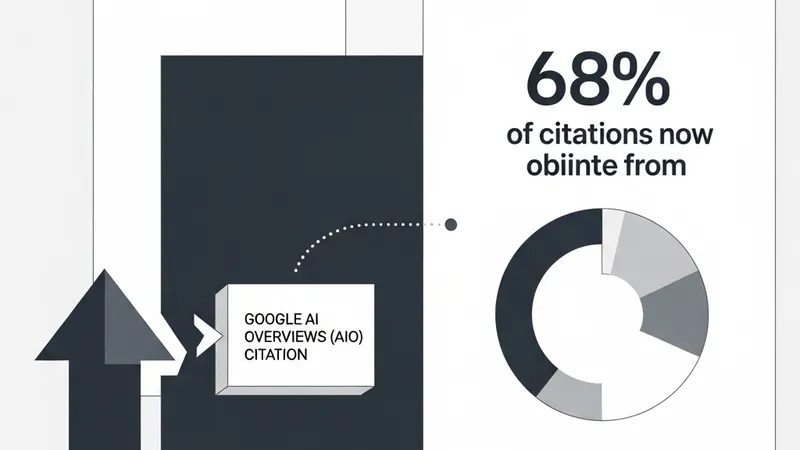
The decoupling of citations from rankings is backed by extensive research. A December 2025 study of over 173,000 URLs found that 68% of AI Overview citations originated from pages ranking outside the organic top 10. By February 2026, data showed only 38% of cited pages held a top 10 spot, a sharp decline from 76% in mid-2025. This confirms that Gemini prioritizes structural readability and entity authority over traditional backlink-heavy ranking factors.
This framework introduces three operating modes: Install Mode for building AIO-ready infrastructure, Audit Mode for evaluating existing site eligibility, and Hybrid Mode for targeted improvements. It specifies the technical patterns required to earn eligibility and the maintenance cadence needed to defend against the volatility of AI regeneration.
Implementation notes cover a wide stack including React, Next.js, Svelte, and Hugo. While the core patterns are provided in plain HTML for clarity, specific considerations are provided for pure client-rendered SPAs versus SSR/SSG implementations. Developers are encouraged to use tools like Claude Code CLI to consume this documentation, baseline current performance, and automate the audit of representative pages.