Just over a week ago, as the AI community was still processing the sudden export restrictions and effective banning of Claude Fable 5, Z.ai rolled out its latest model, GLM-5.2, to its coding plan members on June 13th. While weekend releases are unusual (historically associated with events like the Llama 4 leak), this Saturday launch allowed Z.ai to capitalize on the public sentiment criticizing Anthropic's closed-source guardrails. Chinese open-weight labs have mastered utilizing these tactical windows for significant marketing wins.
Although GLM-5.2's naming convention suggests an incremental update from GLM-5.1, it has driven a massive shift in user experience. Currently, companies like Moonshot AI (creators of Kimi) and Z.ai dominate the top of the open-weight market among researchers. #GLM-5.2 serves as a prime example of how minor version updates, backed by fine-tuning, can cross critical performance thresholds to unlock entirely new AI Agent use cases.
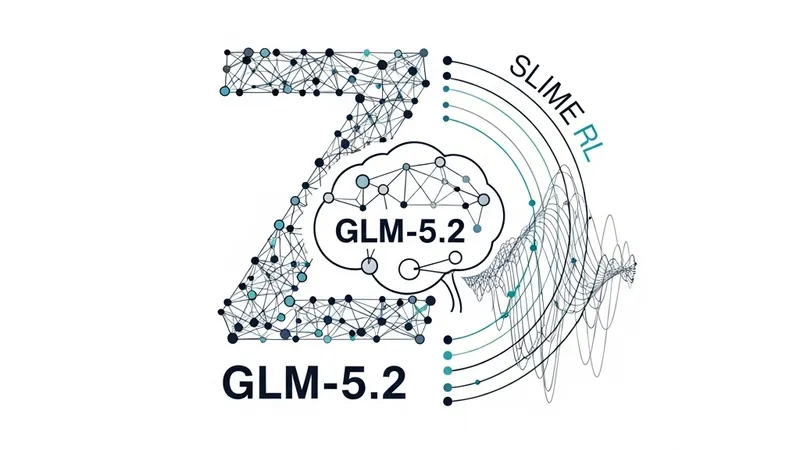
Following the initial rollout, Z.ai released the official MIT-licensed weights and technical details on June 16th. While the technical blog highlights their custom RL framework called SLIME and recommends running the model on "Max thinking effort" mode, the real proof lies in the community's reaction. In an era where traditional benchmarks are losing credibility, real-world deployment evaluations are what truly matter.
Shortly after, community evaluations proved GLM-5.2's remarkable capabilities. On the Arena Agent leaderboard, it stood out as the only open model competing directly with OpenAI and Anthropic's latest models, matching Opus 4.8 (no-thinking mode) when running on max thinking effort, while also crushing Gemini across multiple tasks. On the Design Arena benchmark, it even outpaced Claude Fable, earning widespread acclaim from leading AI researchers and commentators.
[AgentUpdate Depth Analysis] The release of GLM-5.2 marks a pivotal watershed moment for the #open-source AI Agent ecosystem. Historically, open models lagged behind proprietary giants like GPT-4 or Claude in complex multi-step planning and tool execution due to fragile reasoning chains. By leveraging the SLIME reinforcement learning framework and introducing granular "thinking effort" controls, GLM-5.2 demonstrates that open-weights can deliver enterprise-grade reliability in agentic workflows. When compared to costly closed-source APIs, GLM-5.2 offers a highly cost-effective, private, and customizable alternative under a permissive MIT license. This breakthrough will dramatically lower the barrier to entry for building advanced, multi-agent cooperative networks, pushing the AI Agent paradigm from theoretical prototyping into robust, production-ready enterprise adoption.