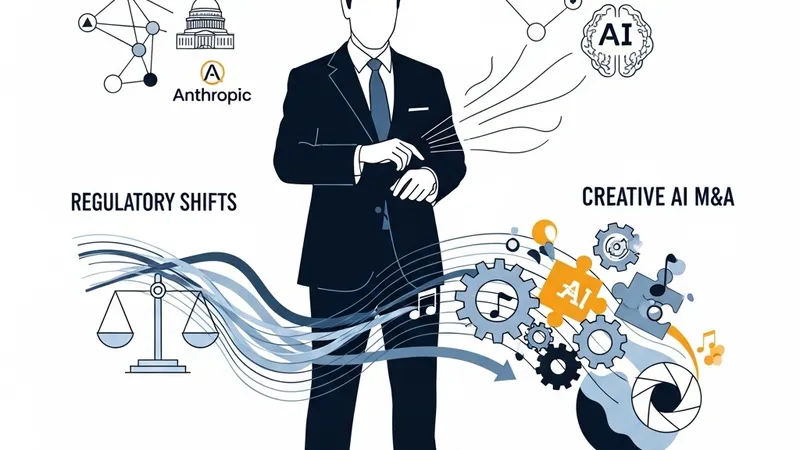
In a recent industry briefing, Wedbush Securities analyst Dan Ives weighed in on the pivotal negotiations between the US government and Anthropic. These ongoing discussions underscore a growing federal urgency to establish rigorous safety and deployment guardrails for frontier models, especially as military and government-grade implementations become more imminent.
Addressing the shifting dynamics of AI M&A, Ives highlighted how strict antitrust scrutiny from regulators is pushing tech giants toward creative "acqui-hire" structures rather than outright buyouts. Startups building AI agents and foundational models are finding it increasingly difficult to survive independently due to soaring compute costs, forcing them to align with hyper-scalers for survival.
Furthermore, Ives addressed the financial sustainability of leading labs, particularly pointing to OpenAI's massive projected losses. As training next-gen models like GPT-5 demands capital in the billions, the industry is facing a critical turning point where enterprise ROI must be proven through scalable, commercialized solutions rather than raw research outputs.
[AgentUpdate Depth Analysis] The commentary by Dan Ives highlights a critical inflection point for the global AI Agent ecosystem. As foundational #LLM providers face unsustainable cash burn and tighter regulatory oversight, the industry's focus is shifting from raw parameter scaling to practical, cost-effective deployment. The talks between #Anthropic and the US government signal that security, compliance, and standard protocols like Model Context Protocol (MCP) will dictate future enterprise adoption. Furthermore, the constraint on traditional M&A means that independent AI Agent startups must build immediate, high-margin revenue streams rather than hoping for quick exits. The true winners of this phase will not be those with the largest models, but those who can seamlessly orchestrate multi-agent workflows that deliver tangible ROI to enterprise customers, shifting the industry from capital-intensive R&D to high-efficiency utility.