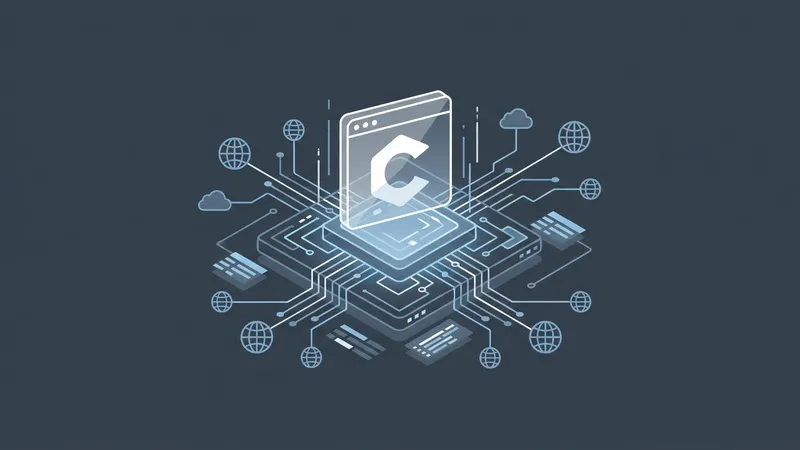
Anthropic has officially launched its Claude Windows App, expanding its reach beyond web browsers. While it offers a sleek interface for daily productivity, its true value lies under the hood, serving as a gateway for Claude 3.5 Sonnet's groundbreaking Computer Use capability, which is a major leap in autonomous agent interaction.
From an architectural perspective, desktop clients provide a robust Agent Infrastructure. Unlike restrictive web sandboxes, a native OS application can better coordinate system-level events, process high-resolution screenshots with lower latency, and manage tasks under the OSWorld benchmark with enhanced reliability. It acts as the physical 'hands and eyes' for the underlying model.
Integrating agentic workflows at the OS level demands strict security. #Anthropic implements isolated environments and virtualization safeguards within the desktop wrapper to prevent unauthorized system commands, creating a safe, enterprise-grade deployment template for developers building next-gen AI Agent systems.
[AgentUpdate Depth Analysis] The release of #Claude's Windows app signifies a strategic shift from pure conversational LLMs to OS-level action agents. Compared to Microsoft's system-integrated Copilot or OpenAI's desktop initiatives, Anthropic is double-downing on 'UI-directed automation'. By utilizing raw pixel data and mouse/keyboard event streams, Claude bypasses traditional API constraints. This 'API-less integration' is revolutionary for the AI Agent ecosystem, as it allows LLMs to interact with legacy software without custom developer integrations. Ultimately, this infrastructure positions Anthropic to define the future of AI-native operating systems, where the GUI becomes the universal API for autonomous agents.