As generative AI transitions into production environments, relying solely on single-prompt interactions is hitting a bottleneck. Industry pioneer Anthropic recently published a highly influential guide, 'Building Effective Agents,' systemizing how to architect systems ranging from simple workflows to complex #Multi-Agent setups using Claude 3.5 Sonnet. The core of this revolution lies in reshaping AI from a single model to a controlled engineering system.
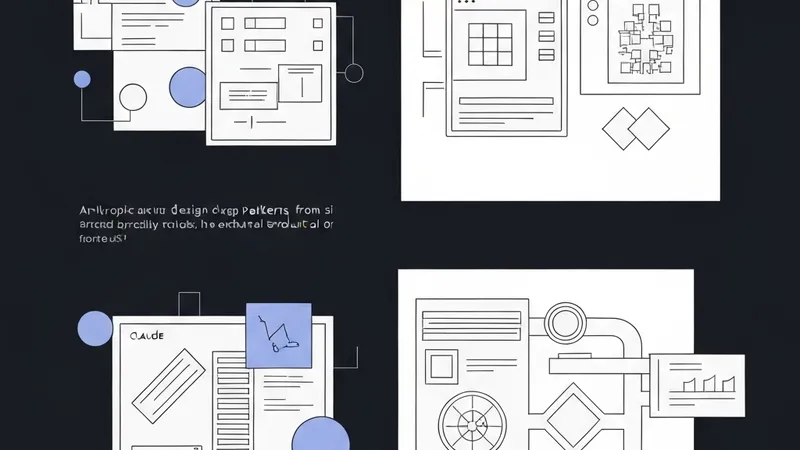
The guide emphasizes that successful Agent architectures should adhere to Occam's razor—preferring simplicity over unnecessary complexity. #Anthropic categorizes these into five core design patterns. First is Chaining, which splits a task into a linear sequence of steps where each step's output feeds the next. Second is Routing, which classifies an input and directs it to specialized downstream paths. Third is Parallelization, where the model runs non-dependent tasks simultaneously and aggregates their results to minimize latency.
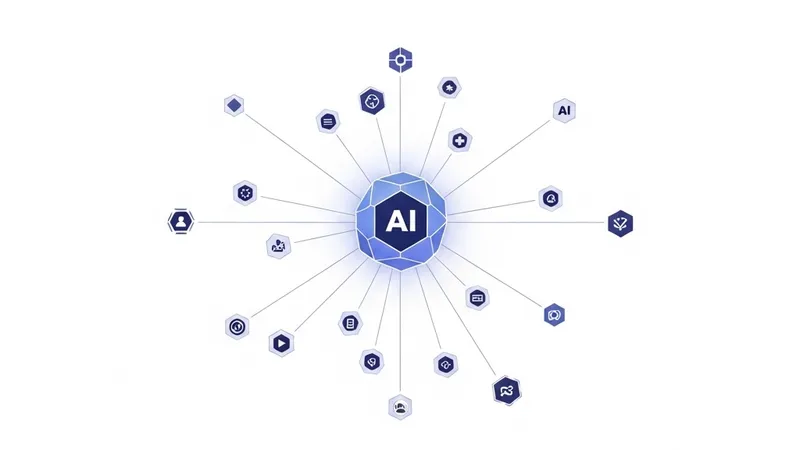
For more sophisticated scenarios, Anthropic recommends the Evaluator-Optimizer and the Orchestrator-Workers patterns. Under the orchestrator pattern, a central #Claude instance dynamically analyzes a task, breaks it down, delegates sub-tasks to multiple worker agents, and synthesizes the final output. Combined with the open-source Model Context Protocol (MCP), these agents can securely and seamlessly connect to local databases and external APIs, resolving the long-standing 'data silo' challenge in agentic workflows.
[AgentUpdate Depth Analysis] Anthropic’s open-sourcing of the Model Context Protocol (MCP) and its pragmatic design patterns mark a paradigm shift from pure model-capability reliance to robust system engineering. Unlike early frameworks like AutoGen, which prioritized autonomous and often unpredictable agent emergence, Anthropic champions controlled 'workflows' and structured 'orchestrator-worker' patterns. This pragmatic approach balances flexibility with predictability, making agentic systems viable for enterprise production. Over the long term, the standardization brought by MCP will decouple foundation models from local tools and data sources, transforming the AI agent ecosystem into an interoperable web of microservices. It challenges heavy orchestration frameworks to pivot toward lightweight, state-management-focused libraries, accelerating the transition to a plug-and-play Agent economy.