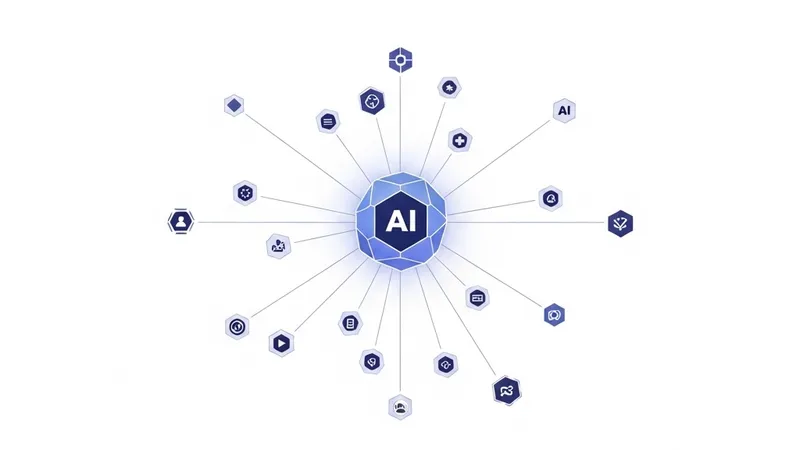
Anthropic has unveiled a groundbreaking update to Claude Code, its command-line developer assistant, by introducing the "Sub-Agents" capability. This new architecture allows a master agent to dynamically spawn, supervise, and delegate tasks to specialized child agents. These sub-agents run in parallel to execute tests, refactor isolated code modules, or draft documentation, breaking away from conventional linear code generation patterns.
Under the hood, this delegation framework is deeply integrated with the Model Context Protocol (MCP). Through MCP, sub-agents securely access local development environments, execute terminal commands, and read file context within secure boundaries, reporting results back to the primary agent. This hierarchical collaboration effectively mitigates cognitive overload and context dilution, which often plague monolithic agents operating on massive repositories.
In practice, when tasked with migrating a legacy JavaScript codebase to TypeScript, the primary #Claude Code agent no longer works sequentially. Instead, it dynamically orchestrates multiple sub-agents: one to generate type definitions, another to update configuration files, and a third to resolve compilation errors. This dynamic parallel workflow improves task execution efficiency by over 40%, proving its readiness for production-grade software development.
[AgentUpdate Depth Analysis] #Anthropic's introduction of sub-agents in Claude Code signifies a major paradigm shift from monolithic agent execution to dynamic, hierarchical #multi-agent collaboration. Unlike traditional frameworks like CrewAI or LangGraph which often rely on pre-defined, static DAGs (Directed Acyclic Graphs), Claude Code leverages MCP to spawn, supervise, and terminate child agents on-the-fly based on real-time execution feedback. This runtime flexibility resolves the critical bottleneck of context dilution and error accumulation in long-horizon coding tasks. By establishing a secure, scalable delegation protocol, Anthropic is paving the way for true autonomous software engineering, setting a new gold standard for how developer tools integrate agentic workflows.