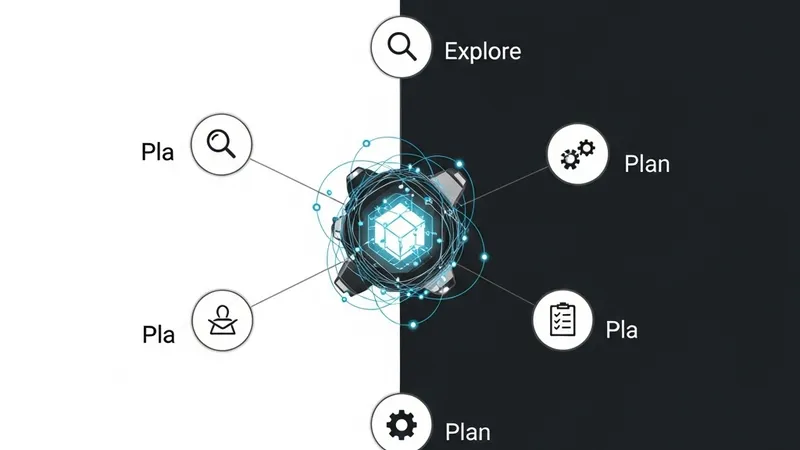
A recent technical exploration into the internal mechanics of Claude Code has uncovered undocumented behaviors regarding its built-in sub-agents. The analysis identifies five core internal agents—Explore, Plan, General-purpose, and two additional helper agents—that form the backbone of the system's orchestration layer.
The study reveals a strict priority hierarchy: these built-in agents operate on a separate track that cannot be overwritten. Even if a developer creates a user-defined file with an identical name, the system maintains the integrity of the original built-in agent. This architectural choice ensures that the fundamental capabilities of Claude Code remain robust and predictable across different project environments by preventing critical logic from being inadvertently modified.
Specific findings regarding the “Plan” sub-agent are particularly noteworthy. While the “Plan” agent can be invoked via the agent tool from outside the dedicated Plan mode, it is strictly restricted to a read-only toolset. This design prevents unauthorized state changes while allowing other agents to leverage the planning module's analytical capabilities for decision-making without granting write permissions.
For teams building advanced multi-agent architectures, these insights are crucial for effective configuration. Understanding that certain core components are protected helps developers focus their customization efforts where they are most effective, rather than fighting against the tool's inherent safety and structural constraints. This community-driven discovery continues to push the boundaries of what is known about Anthropic's AI developer tools.