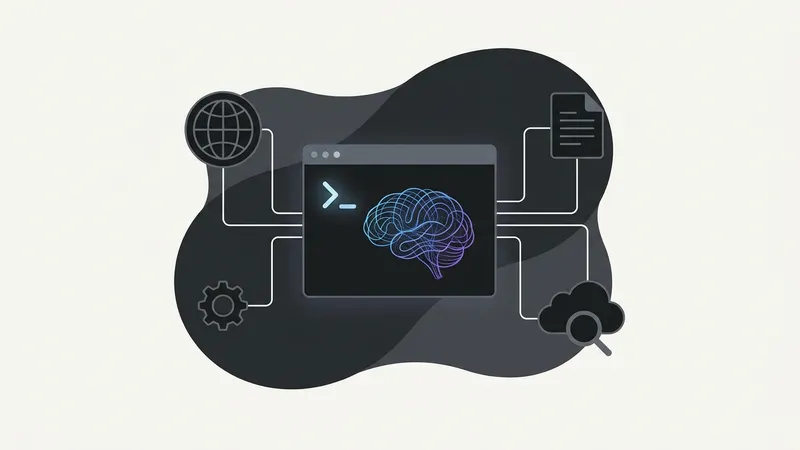
Recently, AI pioneer Anthropic officially launched Claude Code, its first command-line interface (CLI) tool designed to act as an agentic developer directly within the terminal. Powered by the state-of-the-art Claude 3.7 Sonnet model, #Claude Code is not merely a completion plugin, but a fully realized software engineering agent capable of searching, editing, and executing complex terminal commands.
The true power of Claude Code lies in its ability to autonomously execute and interpret software tests. In standard development workflows, debugging is often a manual, fragmented process. Claude Code streamlines this by automatically identifying the project's testing framework, whether it be pytest or Jest. It runs the tests, parses the terminal output, diagnoses failures from stack traces, modifies the source code, and reruns the suite until all tests pass without human intervention. This self-healing loop dramatically accelerates the debugging phase.
To maintain safety and developer trust, the agent integrates tightly with Git, presenting all modifications as clear file diffs for review. Furthermore, for high-risk actions such as running custom bash scripts or installing dependencies, Claude Code requests explicit user permission, maintaining a perfect balance between high-velocity autonomy and secure developer oversight.
[AgentUpdate Depth Analysis] The debut of Claude Code signifies a monumental paradigm shift from generative AI assistance to agentic software engineering. While traditional IDE extensions like GitHub Copilot focus primarily on code autocompletion and snippet generation, Claude Code runs directly inside the terminal, closing the execution gap. By leveraging a continuous loop of execution, feedback, and refinement, it acts as a fully realized software agent. In comparison to rivals like Cursor, Claude Code's terminal-native approach allows deeper system-level integration and seamless tool invocation, particularly during debugging and testing. This evolution highlights a future where AI Agents are not just writing code but managing the complete software development lifecycle (SDLC). By autonomously executing tests and self-correcting based on compiler or test suite feedback, Claude Code serves as a blueprint for future AI-agentic platforms utilizing Model Context Protocol (MCP), drastically shifting the developer's role from writing syntax to directing agent workflows.