As AI coding tools transition from basic auto-completion to fully autonomous agents, Anthropic's CLI-based tool, Claude Code, has emerged as a developer favorite. Operating directly inside the terminal, this agent understands entire codebases, runs tests, fixes bugs, and automatically manages Git workflows. This guide delivers an in-depth look at 25 of the most powerful features in #Claude Code to supercharge your daily development productivity.
At the core of Claude Code is its powerful agentic loop. When invoking slash commands such as `/bug` or `/explain`, the agent does not just offer text suggestions; with your authorization, it runs local compilers, captures stack traces, and iteratively edits the files until all tests pass. This write-run-debug loop cuts context switching by up to 70% compared to traditional AI chat interfaces.
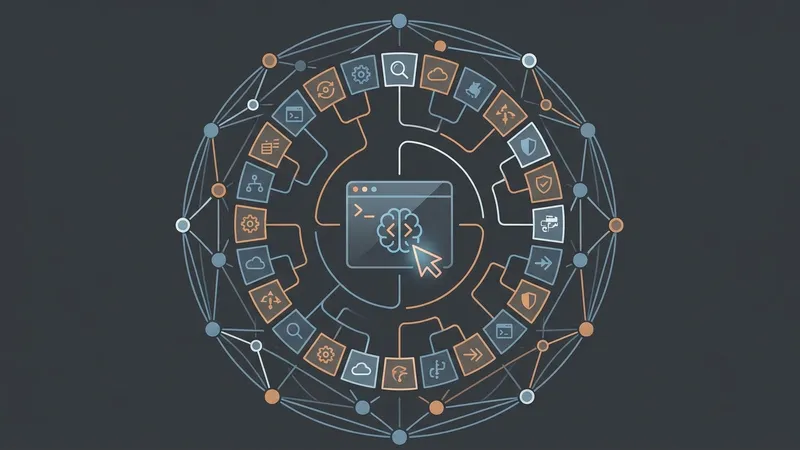
Furthermore, Claude Code’s native integration with the Model Context Protocol (#MCP) breaks down local environment boundaries. By configuring MCP servers, Claude can query database schemas, pull API documentation, and sync directly with project management systems. Utilizing the /search command allows developers to perform semantic codebase queries across millions of lines of code effortlessly.
For day-to-day version control, Claude Code integrates deeply with Git. The /commit command auto-generates conventional commit messages by analyzing git diffs. To ensure security, Anthropic has implemented rigorous permission guardrails, prompting user confirmations for any destructive bash execution, thus keeping the developer firmly in control.
[AgentUpdate Depth Analysis] The evolution of Claude Code marks a critical shift from 'Copilot' to 'autonomous Agent' in the AI engineering landscape. Compared to graphical tools like Cursor or GitHub Copilot Workspace, Claude Code excels by remaining lightweight and terminal-native, utilizing command-line efficiency to its fullest. By treating the terminal as its direct environment, it establishes a perfect benchmark for local agent execution backed by the Model Context Protocol (MCP). In the long term, the rise of terminal-native agents like Claude Code will force DevOps and CI/CD pipelines to become more 'Agent-friendly'. Developers will increasingly shift from manual syntax writing to high-level system supervision, managing multiple autonomous CLI agents that refactor, test, and deploy codebases locally with minimal friction.