Entering 2026, generative AI has evolved far beyond basic conversational chatbots into highly autonomous AI Agents. Tech leaders and developers face a critical technical selection challenge: how to choose among Claude, ChatGPT, Gemini, and NotebookLM. This article provides a comprehensive evaluation of these four major AI systems, focusing on their architecture, real-world productivity scenarios, and agentic ecosystems in 2026.
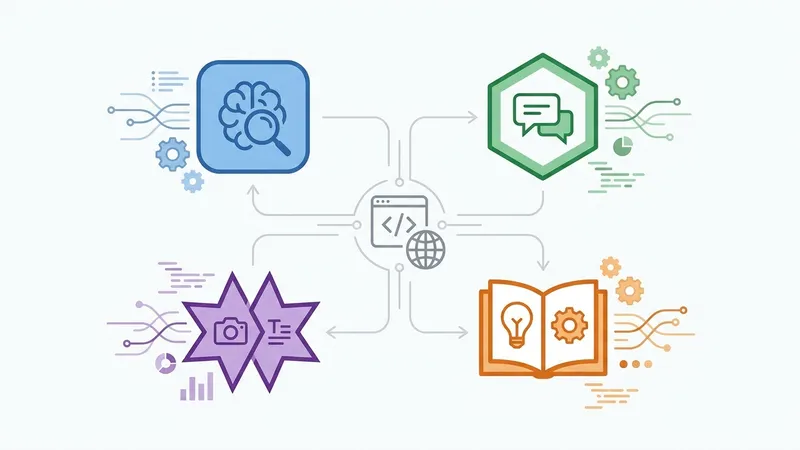
First, Anthropic's #Claude has solidified its position as the premier choice for developers. Leveraging its exceptional reasoning capabilities and the standardized Model Context Protocol (MCP), Claude excels in automated software engineering. Its advanced Computer Use and Artifacts features enable seamless, end-to-end SDLC agentic workflows. For complex tasks requiring precise code generation, algorithmic logic, and tool manipulation, Claude remains the gold standard.
Meanwhile, OpenAI's #ChatGPT continues to dominate both consumer and enterprise landscapes. Powered by the GPT-5 architecture and its cutting-edge o-series reasoning models, ChatGPT excels in multi-step planning, high-level strategic reasoning, and advanced real-time voice interaction. It serves as an ultimate orchestrator for complex corporate workflows, transforming static databases into dynamic execution agents.
Google's Gemini commands a unique advantage with its massive 2-million token context window and native multimodal capabilities. Gemini can ingest hours of video, entire codebases, or extensive technical documents without requiring complex RAG systems, providing unmatched holistic analysis. For multimodal agents requiring deep Google Workspace integration and real-time processing of massive datasets, Gemini is the ideal infrastructure.
Lastly, NotebookLM has carved out a unique niche as a specialized research companion. Serving as a personalized knowledge-graph compiler, #NotebookLM ensures zero-hallucination, source-grounded synthesis of uploaded documents. In 2026, its flagship "Audio Overviews" feature has become highly interactive. For researchers and knowledge workers, NotebookLM acts as a specialized vertical agent for intensive document processing.
[AgentUpdate Depth Analysis] In 2026, the competitive frontier of LLMs has shifted entirely from baseline model parameters to "Agentic Capabilities." A horizontal comparison reveals distinct strategic paths: Claude aims to define the operational standards of the AI era via MCP and tool-use; ChatGPT targets being the primary consumer portal for autonomous execution; Gemini leverages compute and native long-context multimodal strengths to ingest enterprise-grade data; while NotebookLM showcases the immense value of narrow, hyper-focused "Knowledge Agents." The future of the AI Agent ecosystem hinges not on static benchmarks, but on the depth of real-world integration. Organizations should shift their evaluation from raw benchmark scores to active tool-invocation rates, context retention, and error-recovery efficiency in real-world production environments.