WWDC26 marks a significant convergence in Apple's product philosophy. Moving from the spotlight on AI in WWDC24 to UI in WWDC25, the new iOS 27 brings both together. Apple dedicated nearly 40 minutes of the keynote to Apple Intelligence, emphasizing that meaningful AI must be user-centric.
iOS 27 shifts the paradigm from device-centric updates to feature-driven, AI-integrated capability. The system refines the liquid glass design language, allowing users to customize transparency. Under the hood, App launch speeds are boosted by 30%, photo loading in the gallery is 70% faster, and AirDrop speeds are up by 80%.
Apple has reconstructed the system-wide Spotlight Search with background indexing for personalized query context. In a major move, iCloud Shared Albums now support Android and Windows users, and AirPods gain a custom equalizer. For Chinese users, the native Clock App finally supports holiday alarm clocks that adapt to work-shift adjustments, alongside a redesigned Weather App.
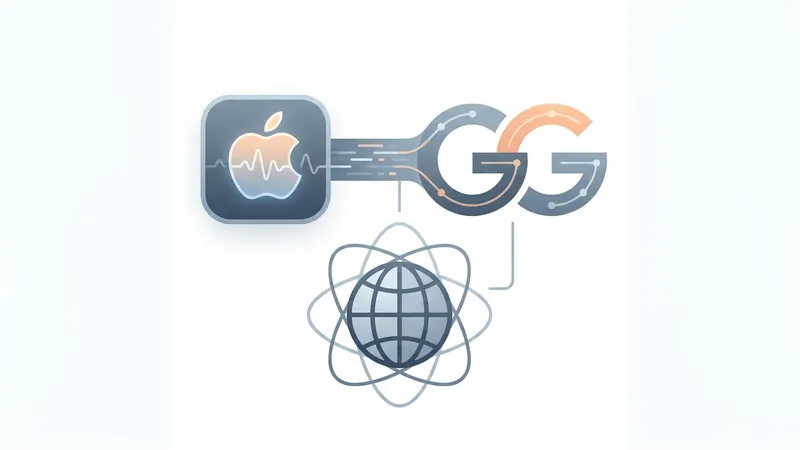
Apple Intelligence is Apple's strategic counteroffensive to reclaim the system-level entry point. Underpinning this is a deep collaboration with Google, leveraging Gemini technology to build next-generation Apple Foundation Models running both on-device and via Private Cloud Compute. Apple's Craig Federighi noted that unlike competitors pushing AI for its own sake, Apple focuses on understanding personal screen context.
Sixteen years after its acquisition, Siri has finally evolved into a ChatGPT-like agent. It syncs chat history across Apple devices via iCloud and features deep integration with the Dynamic Island, glowing with an elegant gradient edge. Powered by advanced on-device models, #Siri understands screen context and personal schedules, enabling multi-step task execution across apps.
[AgentUpdate Depth Analysis] Apple's redesign of Siri and Apple Intelligence at WWDC26 signals the arrival of the "OS-as-an-Agent" era. Unlike standalone agents like ChatGPT or Claude that operate within sandboxed applications, Apple leverages its control over iOS and Apple Silicon to embed the "Perception-Planning-Action" loop directly into the operating system. Partnering with Google's Gemini solves the tension between localized computing and cloud LLMs, while screen awareness and cross-device indexing grant Siri unprecedented contextual privilege. This shift to system-level agents fundamentally threatens traditional App Store economics. When an OS-level agent can orchestrate multi-app workflows seamlessly, individual apps risk being demoted to backend data pipelines. Ultimately, this points to a bifurcated AI Agent ecosystem: OS gatekeepers dominating interaction and intent routing on one end, and highly specialized APIs providing raw execution on the other.