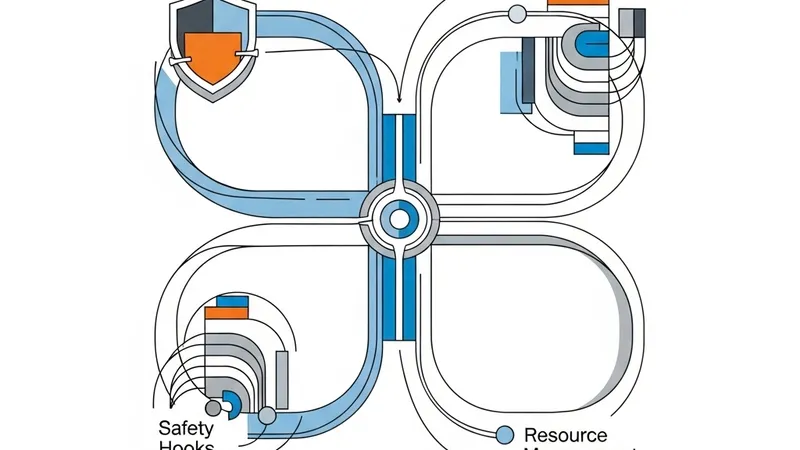
Recently, AI frontrunner Anthropic and high-ranking White House officials held closed-door discussions to forge a collaborative path forward on the safety of frontier AI models. As models like Claude 3.5 Sonnet push the boundaries of reasoning and autonomy, both policymakers and tech leaders face the urgent challenge of securing these systems against national security and infrastructure risks.
The collaborative framework focuses on enhancing red-teaming and safety evaluation standards under the US Artificial Intelligence Safety Institute (US AISI). #Anthropic showcased its pioneering Constitutional AI methodology, demonstrating how adaptive alignment can facilitate robust third-party testing without compromising proprietary model weights. This is particularly crucial as large language models transition into highly capable AI Agents that operate in real-world environments.
According to industry observers, the partnership underscores Washington's ambition to set global benchmarks for AI governance. Dario Amodei, CEO of Anthropic, emphasized that establishing quantifiable safety metrics is a prerequisite for enterprises to confidently deploy autonomous agents in highly regulated verticals like finance and healthcare.
[AgentUpdate Depth Analysis] The dialogue between Anthropic and the White House signals a pivotal shift in AI governance from static text filtering to dynamic agentic behavioral sandboxing. Because AI Agents leverage tools, call APIs, and make autonomous decisions, their threat vector is exponentially larger than that of standard LLMs. While OpenAI pursues an internal progressive deployment safety strategy, Anthropic is strategically positioning its "Constitutional AI" framework as a public regulatory standard. This regulatory alignment will fundamentally reshape the AI Agent ecosystem, turning "Compliance-as-a-Service" into a foundational layer. Developers utilizing protocols like MCP must architect security-by-design, as government-backed safety standards transition from optional guardrails into mandatory gates for mainstream enterprise agent adoption.