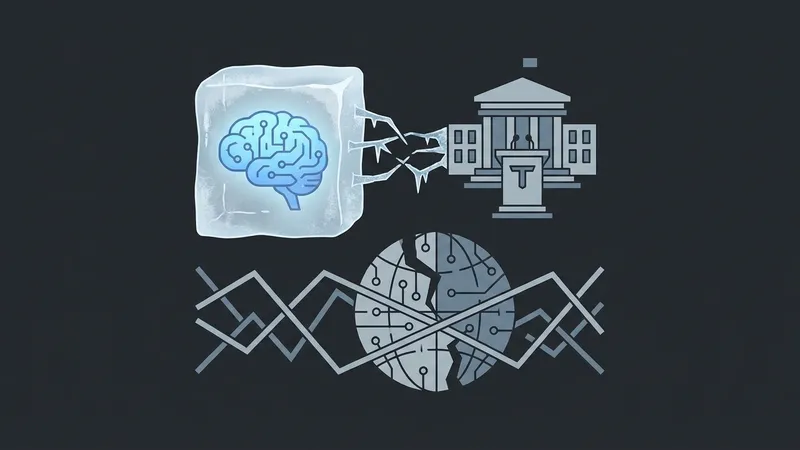
According to sources familiar with the matter reported by the Financial Times, the Trump administration has abruptly frozen the deployment and external release of Anthropic's most advanced artificial intelligence models, citing national security and the protection of sensitive technologies. This unexpected regulatory intervention has thrown the multi-billion dollar "safety-first" startup into a scramble, forcing its leadership to initiate urgent lobbying efforts in Washington to seek exemptions or clarify policy boundaries.
At the center of this freeze are #Anthropic's next-generation frontier models, including the highly anticipated full release of Claude 3.5 Opus and the next-generation architecture codenamed Claude 4. Regulators have expressed deep concerns over the potential risks of frontier models in extreme scenarios, such as autonomous cyber warfare, bioweapon synthesis assistance, and high-level autonomous decision-making. Under the Trump administration's "tech nationalism" agenda, security compliance for frontier AI has been elevated to an unprecedented political level, imposing rigorous scrutiny on any model involving cross-border access or multinational R&D.
For Anthropic, this freeze is a severe commercial blow. The company is deeply integrated with Amazon Web Services (AWS) and Google Cloud for training compute on massive Nvidia H100 clusters. Delaying model deployment directly hampers its monetization roadmap, particularly as its chief rival OpenAI accelerates the development of its next-generation models (such as Orion) with Microsoft’s backing. Anthropic's competitive edge in the enterprise market is now under immediate threat.
Furthermore, this regulatory crackdown has directly impacted Anthropic's newly launched Computer Use feature, a cornerstone of its AI Agent ecosystem designed to let models control keyboards, mice, and screens. Regulators fear that deploying highly autonomous agents without bulletproof containment protocols could enable automated cyber exploits. This regulatory friction is already causing anxiety across the global developer community regarding the compliance costs of future agentic workflows.
[AgentUpdate Depth Analysis] The Trump administration’s hard freeze on Anthropic’s frontier models marks a decisive shift in AI governance, transitioning from ethical debate to raw geopolitics and national security mandates. For the AI Agent ecosystem, this signals a massive divergence in the deployment of agentic workflows. Frameworks like Computer Use and the Model Context Protocol (#MCP), which demand deep system-level integration, will inevitably face the highest regulatory hurdles due to their inherent capabilities for autonomous action. This will likely split the developer ecosystem: one path leading to highly locked-down, government-compliant corporate clouds, and the other fueling the rise of decentralized, local-first, and privacy-centric open-source agents. Developers must prepare for a future where access to the absolute "frontier" of intelligence is heavily rationed, shifting the competitive battleground to edge computing and hyper-optimized local orchestration.